
News
VC backing for foodtech startups slumps but ‘new ingredients’ attract interest
13 Oct 2025Agrifoodtech investments slumped this year to levels not seen since 2015, with “little hope” they will increase significantly by the end of the year, a report has found.
Foodtech startups raised $16 billion in 2024, a 25% increase compared with the $12.7 billion raised the previous year – but investments slumped in the first half of this year to $5.5 billion, with “little hope” they will increase significantly by the end of the year, according to DigitalFoodLab, an innovation consultancy.
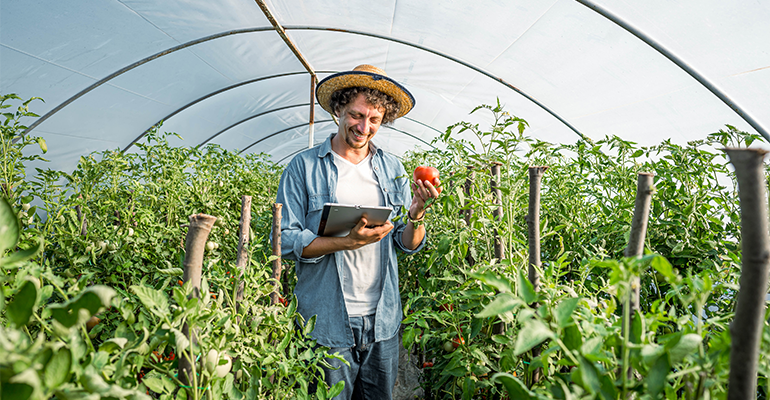
“Agrifoodtech investments have just gone back a decade in terms of volume and returned to 2015 levels,” it wrote in its Global FoodTech Investment Report 2025.
Startup funding declines by almost one-third
The sharp decline in pre-seed and seed funding – that is, investments in emerging startups – is a particular cause for concern: while investments increased overall in 2024, they declined by more than 31% for early-stage deals.
The average deal size is also shrinking, and there has also been a “steep decline” in the number of deals. All categories are feeling the pain, the consultancy reported, noting the high-profile problems felt by those in the alternative protein space.
Not all regions are finding funding hard to come by, however. The share of investments going to US-based startups reached its highest point ever in the first half of 2025, for example, at 59%. US foodtech investments increased in the first half of 2025 and could surpass last year’s numbers.
At the same time, Europe’s share has been cut to 12%, effectively “erasing” all the progress made in the past three years or so.
Private funders pull back as public bodies boost budgets
Vestbee, a startup funding platform, also noted in a analysis that the number of active venture capital (VC) backers in foodtech is down 54% from the highs of 2021, while many generalist VCs have “pulled back” from sector, “reallocating capital to sectors perceived as more insulated from consumer demand volatility”.
“The investment capital tends to gravitate toward companies that have already achieved meaningful revenue traction and built business models aligned with long-term market themes such as sustainability, health, and supply chain resilience,” Vestbee explained.
Despite the slowdown, numerous new foodtech initiatives have emerged – from specialised VC firms that grasp the regulatory and operational nuances of categories like cultured meat to accelerators and public bodies that foster innovation.
For example, EIT Food is this year supporting a cohort of 65 startups involved in everything from regenerative agriculture and sustainable packaging to new ingredients.
Indeed, DigitalFoodLab said the current decline in private funding for agritech was “partially compensated” by a stronger involvement of public players (notably through large investment plans in biotech) and large agrifood companies through partnerships.
In the past year there has been more than $10 billion in acquisition volume, with more than $6 billion spent on “innovative brands. In all cases, these had a wellness or healthy ageing element attached to them, showing the great appetite of larger companies for this topic,” wrote DigitalFoodLab in its report.
More recent examples include Danone’s acquisition of Belgian gut microbiome-based health ingredients brand The Akkermansia Company and the launch of “cow-free” dairy products by Israel’s Strauss Group with precision fermentation startup Imagindairy.
As for the coming year, DigitalFoodLab predicted: “The purge of the 2021/2022 excesses is still not over yet.”
It added: “We still expect large companies to continue investing in medium- and long-term innovation in areas as diverse as sustainability, digitisation, and healthy ageing (and new ingredients in general).”
Funding for startups continues to flow, if not flood, the sector.
Alice Mushrooms, a US startup, has just raised $8 million (from Unilever and celebrities) for its functional vegan chocolate, which is packed with nootropics and adaptogens, while in Singapore, Terra Oleo raised $3.1 million for its palm oil and cocoa butter alternatives.
Perhaps more significantly, French startup NxtFood has just raised €49 million to scale its plant-based alternatives.
“It’s nice to see a sizeable deal in an otherwise depressed plant-based ecosystem,” noted DigitalFoodLabs in a weekly roundup published in September.
Related news

Oat Barista: Innovation for game-changing beverages
20 Nov 2025
Oat Barista is a clean label, sustainable, and innovative drink base specifically designed to create the perfect foam in one single ingredient.
Read more
Nitrites: Pressure grows on UK to follow EU’s lead
20 Nov 2025
Pressure is growing on the UK to follow the EU’s lead after the bloc revised its regulations on the permitted levels of nitrites and nitrates in cured meats.
Read more
Empowering innovation in fortification and colouration
13 Nov 2025
Divi’s Nutraceuticals offers a large portfolio of innovative, high-quality ingredients for foods, beverages, and supplements, with bespoke solutions and expert support for product success.
Read more
Danone highlights digestive health as potential ‘tipping point’ for food industry
13 Nov 2025
Danone is betting on a food industry “tipping point” that will bloat the market for healthy products, particularly those related to gut health.
Read more
Standing Ovation and Bel scale up casein production from dairy co-products
11 Nov 2025
Foodtech company Standing Ovation has partnered with cheese specialist Bel Group to manufacture dairy serums for industrial-scale casein production via precision fermentation.
Read more
AI attraction means foodtech startups must ‘prove’ rather than ‘promise’
4 Nov 2025
Reports suggest that artificial intelligence (AI) is sucking investment from foodtech and agritech, but investors say the picture is complicated.
Read more
Will postbiotics become the go-to functional ingredient?
3 Nov 2025
Postbiotics show significant promise for the functional foods market due to their safety profile and beneficial bioactive properties, research suggests.
Read more
Meet the finalists of the Fi Europe Innovation Awards 2025
31 Oct 2025
Who made it to the shortlist of the Fi Europe Innovation Awards 2025? Read about the 23 companies making food and drink products healthier and manufacturing processes more efficient.
Read more
Penguin and Club bars no longer classed as chocolate
30 Oct 2025
Penguin and Club bars can no longer be classified as chocolate after the pladis-owned McVitie’s brands turned to cheaper alternatives amid the ongoing cocoa crisis.
Read more
Shorter drying time, sweeter success!
30 Oct 2025
Curious about cost-effective, sustainable and delicious candy making? Stefan Wessel reveals how Avebe’s solutions reduce drying time and energy use by up to 50%.
Read more