
News
UN Report: Government agriculture subsidies harm the environment
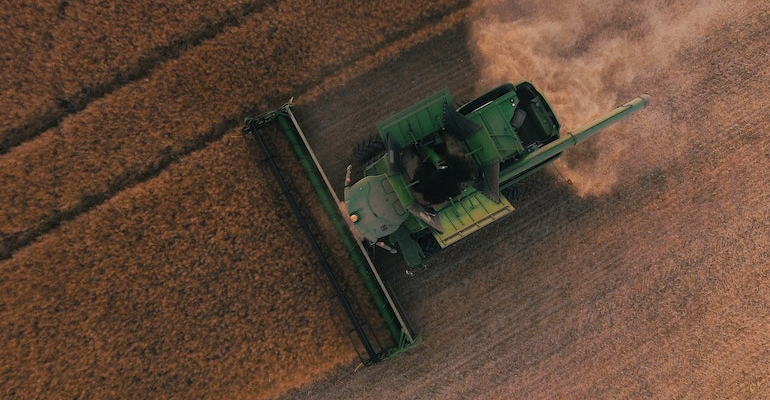
23 Sep 2021In a new report released by the United Nations, the governmental body noted that nearly 90% of global farming subsidies cause harm to nature and human health. Of the $540 billion in agricultural subsidies allocated annually, the U.N. said $470 billion of those dollars are financing activities that have damaging consequences on the environment.
In the assessment, which was a collaboration between the U.N.’s FAO, UNDP and UNEP bodies, 87% of the monetary support issued by governments support industries that are mainly large agri-business conglomerates “distorts prices, environment and social goals.” Experts from the U.N. called for a “repurposing” of government funding towards sustainable agri-food solutions.
This report comes just prior to the convocation of the U.N. Food Systems Summit in New York, where participants will look to help combat climate change by creating sustainable food systems. While there is no one-size-fits-all solution to battle climate change, the body’s assessment noted that creating more efficient and equitable subsidy distributions will help alleviate practices that are inconsistent with the Paris Agreement goals and the Sustainable Development Goals (SDGs).
Not only are subsidies underwriting practices that are environmentally damaging, according to the report, but the majority are also not flowing toward enterprises that are invested in creating sustainable solutions for the long term alimentation of the global population. The U.N. estimates that by 2050 the global population will hit 10 billion, and in order to feed those people, the agricultural output of both plant and animal foods will need to be increased by 70% as compared to 2009 levels. Arriving at that level of production will pose an acute risk to the climate crisis mitigation goals set forth by the U.N.
Overall, global food systems are responsible for 35% of greenhouse gasses (GHG) emissions worldwide, according to a new study published last week in Nature Food. And the majority of those emissions come from the production of animal-based products, particularly beef and dairy. Every year, the entire food production system produces roughly 17.3 billion tons of GHGs. Of those, 60% are from animal-based foods whereas 29% are from plant-based foods.
In its report, the U.N. acknowledged the continued disparity between climate goals and the reality of current food production. However, the director-general of the FAO Qu Dongyu said in a statement that these findings are “wake-up call for governments around the world to rethink agricultural support schemes to make them fit for purpose to transform our agri-food systems.”
Related news
Soy story: WWF scores UK supermarkets on sustainability efforts
12 Nov 2025
WWF has published its latest “Soy Scorecard”, ranking UK supermarkets’ efforts to combat deforestation and land conversion in their soy supply chains.
Read more
Standing Ovation and Bel scale up casein production from dairy co-products
11 Nov 2025
Foodtech company Standing Ovation has partnered with cheese specialist Bel Group to manufacture dairy serums for industrial-scale casein production via precision fermentation.
Read more
New UPF standard hoped to offer consumers ‘coherence and clarity’
10 Nov 2025
Ingredients companies are being urged to enter “a new era of partnership and innovation” following the launch of the industry’s first non-UPF verification scheme.
Read more
Whistleblowers accuse UK meat industry of promoting cheap, unsustainable supply
7 Nov 2025
An anonymous group of industry insiders has accused the UK’s biggest food companies of systematically driving down meat quality and welfare standards.
Read more
Bord Bia presents Irish dairy ingredient suppliers at Fi Europe
6 Nov 2025
Dairygold Co-operative Society, The Carbery Group, and Ornua Co-operative: Meet with sustainable producers of Irish dairy ingredients at Food ingredients Europe 2025, Hall 7.2 Stand M18.
Read more
AI attraction means foodtech startups must ‘prove’ rather than ‘promise’
4 Nov 2025
Reports suggest that artificial intelligence (AI) is sucking investment from foodtech and agritech, but investors say the picture is complicated.
Read more
Penguin and Club bars no longer classed as chocolate
30 Oct 2025
Penguin and Club bars can no longer be classified as chocolate after the pladis-owned McVitie’s brands turned to cheaper alternatives amid the ongoing cocoa crisis.
Read more
Could plant-based protection replace plastic packaging?
29 Oct 2025
Swedish foodtech company Saveggy has launched an additive-free plant-based protection for cucumbers, offering a waste-free packaging solution for fruit and vegetables.
Read more
Does promoting protein content push up plant-based sales?
27 Oct 2025
Promoting the protein content of meat-free products is a more effective sales strategy than adding carbon labels, a study of UK bakery chain Greggs suggests.
Read more
Amazon Grocery launch aims to balance quality with affordability
22 Oct 2025
Global e-commerce giant Amazon has introduced a new private-label food brand, combining existing Amazon Fresh and Happy Belly products with new everyday items.
Read more