
News
Swedish food agency: One in 10 coffee brands contain excess acrylamide
7 Dec 2022
New findings from the Swedish Food Agency have revealed three of 29 coffee products sampled contained acrylamide above limits, reinforcing the link between levels and degree of roasting.
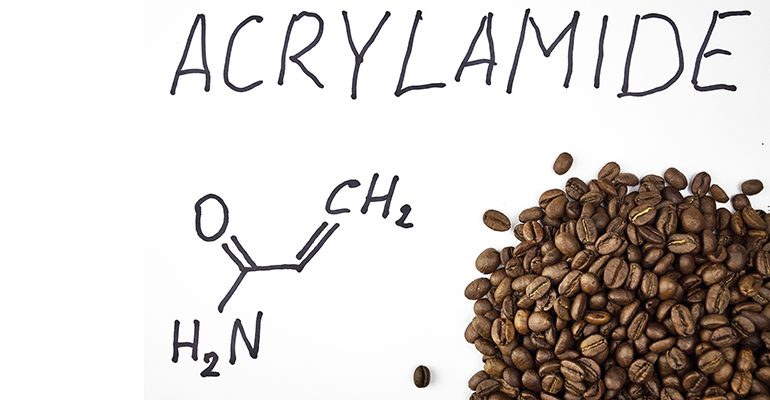
Acrylamide is a carcinogen that naturally forms when certain foods are heated to high temperatures, such as those achieved when roasting coffee beans. Other foods that may contain high levels of acrylamide are crisps, French fries, bread, breakfast cereals, biscuits, and cakes.
In Sweden, the average consumer ingests around 30-40 micrograms of acrylamide per person per day. Latest estimates suggest 10-20% of this amount comes from coffee.

Results revealed that, from the selection of roasted and instant coffee available on the Swedish market, four samples exceeded the acrylamide action limit for roasted coffee of 400 micrograms/kilo.
However, one of these samples consisted of instant coffee, which has a higher action limit of 850 micrograms/kilo. This is because instant coffee is more concentrated than coffee beans, with consumers often taking in less when drinking a cup of instant coffee.
As a result, a cup of instant coffee provides about the same amount of acrylamide as regular brewed coffee.
Reducing acrylamide levels in food
“The authorities stated that several of the large companies carry out their own sampling and monitored the acrylamide content in their products,” the Swedish Food Agency said. “One company is actively working to reduce the content of acrylamide in its products.
“Several authorities stated that some of the small companies had no knowledge of acrylamide and the requirements of 2017/2158 and thus felt that the project was a good way to increase awareness.”
The project forms part of the country’s commitment to improve the safety of the food chain, in particular reduce the risk of negative health effects caused by acrylamide.
On a European-wide level, the research also seeks to ensure business operators take the necessary steps to reduce acrylamide levels in coffee as set out in the European Commission Regulation (EU) No. 2017 /2158.
Dark roasted coffee contains less acrylamide
The Swedish Food Agency's general advice regarding acrylamide is to bake, fry or roast the food carefully, as the acrylamide content increases the darker the food.
However, these latest findings have led the agency to highlight that dark roasted coffee contains less acrylamide than light roasted.
“This is because acrylamide is formed at the beginning of the roasting process but is then broken down by the high temperature if it is allowed to roast longer,” they said.
“Even so, it is not possible to conclude that the dark roasted coffee is healthier than the light roasted one, because other undesirable substances can be formed when the coffee is roasted so hard.”
“Although acrylamide is harmful in too high a dose over a long period of time, this analysis is not a reason to choose one particular type of coffee over another,” the agency added.
“In addition, the amount of acrylamide is not a static value. Coffee producers are working to reduce the acrylamide amounts. Therefore, there is a possibility that the analysis would have a different result if it were done today.”
 © iStock/Taranukha Sergey
Benchmark Dose Lower Confidence Limit (BMDL10)
According to EFSA, acrylamide and its metabolite glycidamide are genotoxic and carcinogenic with any level of exposure potentially damaging to DNA.
EFSA cannot set a tolerable daily intake (TDI) of acrylamide in food preferring to adopt a dose range within which acrylamide is likely to cause a small but measurable tumour incidence (neoplastic effects).
This also extends to other potential adverse effects like neurological, pre- and post-natal development and male reproduction. The lower limit of this range is called the Benchmark Dose Lower Confidence Limit (BMDL10).
For tumours, the BMDL10 for acrylamide and its metabolite glycidamide is 0.17 milligrams per kilogram of body weight per day (mg/kg bw/day).
For other effects, neurological changes were seen as the most relevant with a BMDL10 of 0.43 mg/kg bw/day. By comparing the BMDL10 to human dietary exposure to acrylamide, scientists can indicate a “level of health concern” known as the margin of exposure.
EFSA’s Scientific Committee states that for genotoxic and carcinogenic substances, an MOE of 10,000 or higher is of low concern for public health. The MOEs for the cancer related effects of acrylamide range from 425 for average adult consumers down to 50 for high consuming toddlers.
Related news

Oat Barista: Innovation for game-changing beverages
20 Nov 2025
Oat Barista is a clean label, sustainable, and innovative drink base specifically designed to create the perfect foam in one single ingredient.
Read more
How younger consumers are redefining ingredient choices and rejecting brand loyalty
18 Nov 2025
Gen Z and millennial consumers’ preferences for transparency, functionality, and purpose are “redefining the very nature of consumption itself”, says SPINS.
Read more
Hybrid formats and flexible positioning to disrupt category norms in 2026
17 Nov 2025
Trend forecasters expect food and drink to move more fluidly across occasions, functions, and formats as consumers seek versatility, novelty, and convenience.
Read more
Danone highlights digestive health as potential ‘tipping point’ for food industry
13 Nov 2025
Danone is betting on a food industry “tipping point” that will bloat the market for healthy products, particularly those related to gut health.
Read more
New UPF standard hoped to offer consumers ‘coherence and clarity’
10 Nov 2025
Ingredients companies are being urged to enter “a new era of partnership and innovation” following the launch of the industry’s first non-UPF verification scheme.
Read more
Faravelli at Fi Europe: Showcasing FARA® functional solutions for food and nutra
28 Oct 2025
At Fi Europe 2025 in Paris (stand 72M39), Faravelli showcases FARA® Customized Functional Solutions and a wide ingredient portfolio for food and nutra – delivering quality, innovation, and expertise.
Read more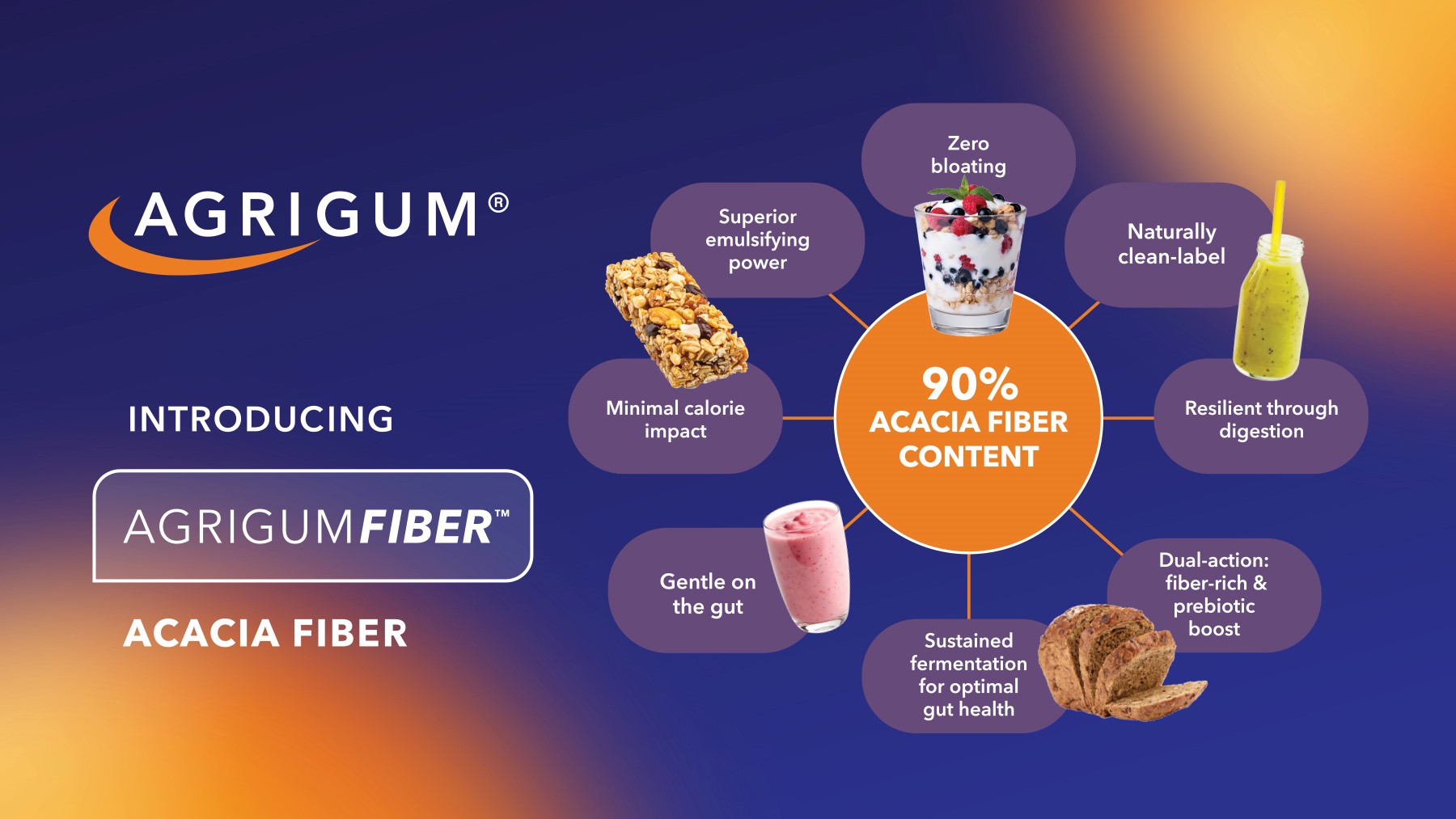
Agrigum Redefined FIBER
27 Oct 2025
Agrigum has transformed gum acacia into a natural, science-backed fibre that supports gut health, sustainability, and innovation across global food and nutrition applications.
Read more
Expanding boundaries in food & beverage innovation
23 Oct 2025
IMCD and FrieslandCampina Professional expand partnership to deliver Kievit® across EMEA, enabling brands to enhance quality and accelerate time-to-market for tomorrow’s food & beverage creations.
Read more
Amazon Grocery launch aims to balance quality with affordability
22 Oct 2025
Global e-commerce giant Amazon has introduced a new private-label food brand, combining existing Amazon Fresh and Happy Belly products with new everyday items.
Read more
Powerade enters hydration space with launch of Power Water
21 Oct 2025
Coca-Cola’s Powerade brand has launched a zero-sugar, electrolyte-enhanced functional water, marking the brand's entry into the hydration space.
Read more