
News
Study: Buying less junk food can lower households' potential emissions by 29%
25 Nov 2021Reducing the consumption of animal-based products is not the only way to eat more sustainably, according to a new study from Purdue University and published by the American Chemical Society. Researchers found that eating fewer foods with high caloric content and low nutritional values can lower a household’s carbon footprint by 29%.
In the study, researchers looked to identify the total amount of greenhouse gas emissions attributable to the products purchased by over 57,000 U.S. households. The sum total of emissions included those associated with the food production cycle from growth to harvest for 83 different food items. As part of the analysis, researchers noted that 71% of homes surveyed could decrease their food carbon footprint.
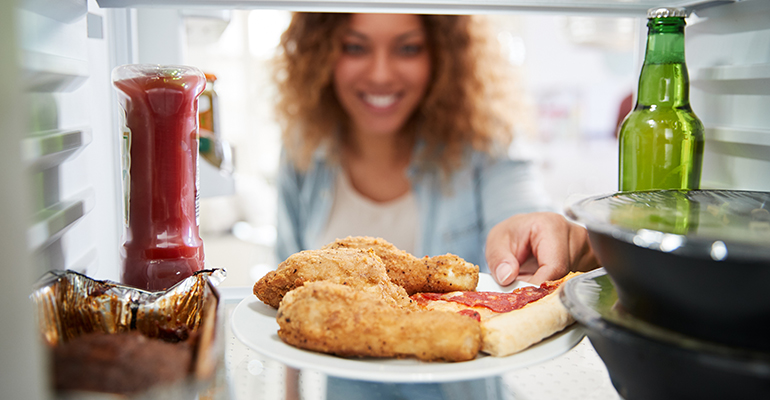
Eating a healthy and sustainable diet has become increasingly popular as consumers look to support the environment through their food choices. As a result, highly-processed packaged foods have started to fall out of favor with consumers who are replacing these options with better-for-you alternatives that have higher nutritive values and that profess to be more sustainable for the environment.
While many products purport to be better for the environment, the study found that foods like savory bakery products and ready-made foods are an under-the-radar culprit. Individually these choices have relatively low carbon footprints, but because consumers typically purchase these products in large quantities, they can up to “significant emissions,” according to the study.
In addition to reducing the number of packaged bakery and ready-made foods and cutting out options that have high caloric content with a low nutritional value, researchers recommended that households with one or two members buy less food in bulk quantities. The packaging and the food waste associated with these purchases directly contribute to a household’s carbon footprint. To help encourage purchases in smaller quantities, manufacturers should offer cost-effective package sizes, the study suggested.
Sustainable food options have continued to gain importance for shoppers when filling their carts. Last year, the pandemic gave sustainably-minded brands a jolt since 11% more people say they made food purchases with sustainability in mind following months of quarantine, Kearney found. At the same time that people are professing to want more sustainable options, they are also talking with their wallets. Better-for-you junk food options have taken off as shoppers search to replace their favorite snacks with something that is better for both them and the environment.
Transporting food from farms to people’s plates also contributes a sizeable portion of the global greenhouse gas emissions However, data for packaging and transportation were not included in the study because that information was unavailable.
Related news

Soy story: WWF scores UK supermarkets on sustainability efforts
12 Nov 2025
WWF has published its latest “Soy Scorecard”, ranking UK supermarkets’ efforts to combat deforestation and land conversion in their soy supply chains.
Read more
Standing Ovation and Bel scale up casein production from dairy co-products
11 Nov 2025
Foodtech company Standing Ovation has partnered with cheese specialist Bel Group to manufacture dairy serums for industrial-scale casein production via precision fermentation.
Read more
New UPF standard hoped to offer consumers ‘coherence and clarity’
10 Nov 2025
Ingredients companies are being urged to enter “a new era of partnership and innovation” following the launch of the industry’s first non-UPF verification scheme.
Read more
Whistleblowers accuse UK meat industry of promoting cheap, unsustainable supply
7 Nov 2025
An anonymous group of industry insiders has accused the UK’s biggest food companies of systematically driving down meat quality and welfare standards.
Read more
Bord Bia presents Irish dairy ingredient suppliers at Fi Europe
6 Nov 2025
Dairygold Co-operative Society, The Carbery Group, and Ornua Co-operative: Meet with sustainable producers of Irish dairy ingredients at Food ingredients Europe 2025, Hall 7.2 Stand M18.
Read more
AI attraction means foodtech startups must ‘prove’ rather than ‘promise’
4 Nov 2025
Reports suggest that artificial intelligence (AI) is sucking investment from foodtech and agritech, but investors say the picture is complicated.
Read more
Penguin and Club bars no longer classed as chocolate
30 Oct 2025
Penguin and Club bars can no longer be classified as chocolate after the pladis-owned McVitie’s brands turned to cheaper alternatives amid the ongoing cocoa crisis.
Read more
Could plant-based protection replace plastic packaging?
29 Oct 2025
Swedish foodtech company Saveggy has launched an additive-free plant-based protection for cucumbers, offering a waste-free packaging solution for fruit and vegetables.
Read more
Does promoting protein content push up plant-based sales?
27 Oct 2025
Promoting the protein content of meat-free products is a more effective sales strategy than adding carbon labels, a study of UK bakery chain Greggs suggests.
Read more
Amazon Grocery launch aims to balance quality with affordability
22 Oct 2025
Global e-commerce giant Amazon has introduced a new private-label food brand, combining existing Amazon Fresh and Happy Belly products with new everyday items.
Read more