
News
Research: chlorine can make foodborne pathogens undetectable
25 Apr 2018Chlorine, commonly used in the agriculture industry to decontaminate fresh produce, can make foodborne pathogens undetectable according to new research led by the University of Southampton.

Chlorine, commonly used in the agriculture industry to decontaminate fresh produce, can make foodborne pathogens undetectable according to new research led by the University of Southampton.
Foodborne disease presents a consistent but frequently preventable threat to public health, the researchers note, and is responsible for an estimated 2.2 million deaths worldwide annually. In the UK, it is estimated that each year one million people suffer a foodborne illness, resulting in 500 deaths. The research team’s findings may help explain outbreaks of Salmonella enterica and Listeria monocytogenes among produce in recent years. The study highlights an impact of post-Brexit trade agreements, with countries insisting the UK import their chlorine-treated foodstuffs. This new research shows this may not actually be safe. As a consequence of the research one of the collaborators, Vitacress Salads, has become the first UK company to obtain supermarket approval to sell fresh produce washed in spring water without chlorine. “This important work is a major breakthrough, after 100 years of relying on chlorine to sanitise foods and drinking water, and may explain the many unrecognised or untraceable disease outbreaks relying on the gold standard of culture recovery,” said lead author Professor Bill Keevil, Head of the Microbiology Group at the University of Southampton. “The problem with fresh produce, such as lettuce and spinach, is that many people eat it fresh, so it misses the cooking step which would kill most pathogens, one reason why companies have relied on chlorine washing before sale.” “It will likely impact on post-Brexit trade agreements with countries insisting the UK import their chlorine-treated foodstuffs which this new work shows may not actually be safe because the sanitisation does not kill any bacterial pathogens present that are still capable of causing disease. One example is chlorine treated chicken carcasses.” In response to stress such as extreme temperatures, nutrient starvation, or significant dryness, some Gram-positive bacteria can form tough spores and survive for thousands of years in the environment. Bacillus anthracis, which causes Anthrax, is one example. Many bacteria, however, cannot form spores and instead survive a stress by entering a viable but nonculturable (VBNC) state in response to environmental stresses. In their study, the team incubated Listeria monocytogenes and Salmonella enterica populations on spinach leaves and then subjected the spinach to chlorine washes. The viable Listeria and Salmonella populations became VBNC by 50 and 100 parts per million (PPM) chlorine, respectively. Further experiments revealed that roundworms that ingested VBNC cells had shortened lifespans. Dr. Keevil added: “VBNC cells cannot be detected by standard laboratory culture techniques, presenting a problem for the food and water supply industries, which uses these techniques to detect potential disease contaminants. Chlorine induces the VBNC state in foodborne pathogens Listeria monocytogenes and Salmonella enterica and chlorine was ineffective at killing total populations of these pathogens. The data shows that VBNC foodborne pathogens can both be generated and avoid detection by industrial practices, while potentially retaining their ability to cause disease.” Dr Steve Rothwell from Vitacress Salads added: “Some years ago Vitacress recognised real consumer concerns regards the use of dilute chlorinated water in the preparation of ready to eat salads. “Through working with the University of Southampton the company was able to validate a first to market ‘spring water wash’. Instead of using chlorinated water to try to kill bacteria that might be present on salad leaves this natural process works by simply detaching them and flushing to waste.” “This latest publication further validates our adoption of an environment and consumer friendly wash process, suggesting that whilst chlorine washed salads may sometimes yield lower microbial counts, the chlorine could simply be hiding potential problems that we would see and address.”Related news

Oat Barista: Innovation for game-changing beverages
20 Nov 2025
Oat Barista is a clean label, sustainable, and innovative drink base specifically designed to create the perfect foam in one single ingredient.
Read more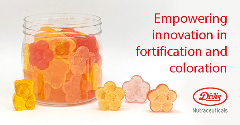
Empowering innovation in fortification and colouration
13 Nov 2025
Divi’s Nutraceuticals offers a large portfolio of innovative, high-quality ingredients for foods, beverages, and supplements, with bespoke solutions and expert support for product success.
Read more
From fruit to functional solutions: Meet Paradise Fruits at Fi Europe in Paris
13 Nov 2025
Paradise Fruits Solutions and Paradise Fruits Health will showcase their combined expertise in delivering innovative, fruit-based solutions to the food and beverage industry at the upcoming Fi Europe trade show (2-4 December 2025, Paris).
Read more
New UPF standard hoped to offer consumers ‘coherence and clarity’
10 Nov 2025
Ingredients companies are being urged to enter “a new era of partnership and innovation” following the launch of the industry’s first non-UPF verification scheme.
Read more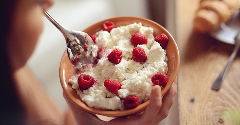
Cottage cheese makes a comeback as consumers call for cleaner labels
6 Nov 2025
From ice cream to dips and ready meals, cottage cheese is experiencing a renaissance as a high-protein, clean ingredient for health-conscious consumers.
Read more
Bord Bia presents Irish dairy ingredient suppliers at Fi Europe
6 Nov 2025
Dairygold Co-operative Society, The Carbery Group, and Ornua Co-operative: Meet with sustainable producers of Irish dairy ingredients at Food ingredients Europe 2025, Hall 7.2 Stand M18.
Read more
Shorter drying time, sweeter success!
30 Oct 2025
Curious about cost-effective, sustainable and delicious candy making? Stefan Wessel reveals how Avebe’s solutions reduce drying time and energy use by up to 50%.
Read more
Could plant-based protection replace plastic packaging?
29 Oct 2025
Swedish foodtech company Saveggy has launched an additive-free plant-based protection for cucumbers, offering a waste-free packaging solution for fruit and vegetables.
Read more
Will Wicks’ Killer Bar harm the protein bar category?
23 Oct 2025
Joe Wicks’ deliberately dangerous protein bar is fuelling anti-UPF sentiment – but there are concerns that his messaging is misguided and could have unintended consequences.
Read more
Expanding boundaries in food & beverage innovation
23 Oct 2025
IMCD and FrieslandCampina Professional expand partnership to deliver Kievit® across EMEA, enabling brands to enhance quality and accelerate time-to-market for tomorrow’s food & beverage creations.
Read more