
News
PepsiCo announces plans to reduce global GHG emissions by 3M tons
27 Apr 2021PepsiCo released its 2030 sustainability goals where it said it plans to eliminate at least 3 million tons of greenhouse gas emissions (GHG) by the end of the decade, improve the livelihoods of more than 250,000 people in its agricultural supply chain and sustainably source 100% of its key ingredients.
The multinational beverage corporation stated that it intends to achieve these goals in large part by spreading regenerative farming practices across 7 million acres of land. According to the company, this acreage is roughly the amount of land used globally to grow the ingredients used within the company’s portfolio.

By 2030, PepsiCo is striving to reduce its own GHG emissions by 40%. However, by 2040, the company is targeting net-zero emissions.
Already, PepsiCo has looked toward overhauling agriculture practices employed by its contract manufacturers as a solution for reducing GHG emissions, and the company has collaborated with farmers across 60 countries to adopt practices that build resilience and improve and restore ecosystems. In the U.S. specifically, PepsiCo encouraged farmers to plant cover crops on over 85,000 acres, resulting in a 38% net reduction in on-farm greenhouse gas emissions.
“By focusing on regenerative agriculture practices at the local level to improve soil health, we can build a stronger foundation for our products and help make the entire food system more sustainable," Jim Andrew, PepsiCo’s chief sustainability officer said in a statement.
While farmers using regenerative agricultural practices are already on this beverage giant’s radar, to achieve its 2030 sustainability goals, the company will expand regenerative agriculture programs to more than 500,000 acres of U.S. farmland by the end of 2021 as well as focus on supporting sustainable educational initiatives vulnerable global farming communities.
As consumers continually demand more sustainable products, many manufacturers are shifting supply chains to accommodate this growing demographic. PepsiCo is no different, and by the end of 2020, it succeeded in targeting its direct-sourced crop (potatoes, whole corn, oats, and oranges) supply chains to achieve sustainable sourcing for 87% of these ingredients. By 2030, the company is looking to source 100% of both its direct-sourced and key ingredients from sustainable sources.
PepsiCo is not the only company that is banking on regenerative agriculture as a way to increase overall environmental sustainability. General Mills, Hormel Food’s Applegate brand and Danone have all invested significantly in this farming approach, which has the advantage of not only bringing sustainable practices to individual farms, but it can boost a company’s bottom line as consumers have been shown to pay a premium for environmentally-conscious products. Many consumers will also switch brands to buy products that meet the environmental standards that they are looking to support, according to a 2018 study by Nielsen.
Increased interest from consumers in environmentally-friendly products as well as the growing importance that consumers have placed on health as a result of the pandemic is leading to a proliferation of sustainability initiatives from manufactures and building on the growth from previous years. Already between 2015 and 2019, products that were marketed as sustainable accounted for 54.7% of the total growth of CPG products although they made up only 16.1% of the total products available, research from IRI and New York University found.
It is unlikely that this trend will slow any time soon, and so PepsiCo committing to bolstering its efforts to be environmentally sensitive will help the company continue to capture consumer interest.
Related news

Oat Barista: Innovation for game-changing beverages
20 Nov 2025
Oat Barista is a clean label, sustainable, and innovative drink base specifically designed to create the perfect foam in one single ingredient.
Read more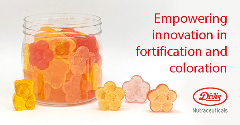
Empowering innovation in fortification and colouration
13 Nov 2025
Divi’s Nutraceuticals offers a large portfolio of innovative, high-quality ingredients for foods, beverages, and supplements, with bespoke solutions and expert support for product success.
Read more
From fruit to functional solutions: Meet Paradise Fruits at Fi Europe in Paris
13 Nov 2025
Paradise Fruits Solutions and Paradise Fruits Health will showcase their combined expertise in delivering innovative, fruit-based solutions to the food and beverage industry at the upcoming Fi Europe trade show (2-4 December 2025, Paris).
Read more
New UPF standard hoped to offer consumers ‘coherence and clarity’
10 Nov 2025
Ingredients companies are being urged to enter “a new era of partnership and innovation” following the launch of the industry’s first non-UPF verification scheme.
Read more
Cottage cheese makes a comeback as consumers call for cleaner labels
6 Nov 2025
From ice cream to dips and ready meals, cottage cheese is experiencing a renaissance as a high-protein, clean ingredient for health-conscious consumers.
Read more
Bord Bia presents Irish dairy ingredient suppliers at Fi Europe
6 Nov 2025
Dairygold Co-operative Society, The Carbery Group, and Ornua Co-operative: Meet with sustainable producers of Irish dairy ingredients at Food ingredients Europe 2025, Hall 7.2 Stand M18.
Read more
Shorter drying time, sweeter success!
30 Oct 2025
Curious about cost-effective, sustainable and delicious candy making? Stefan Wessel reveals how Avebe’s solutions reduce drying time and energy use by up to 50%.
Read more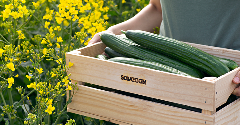
Could plant-based protection replace plastic packaging?
29 Oct 2025
Swedish foodtech company Saveggy has launched an additive-free plant-based protection for cucumbers, offering a waste-free packaging solution for fruit and vegetables.
Read more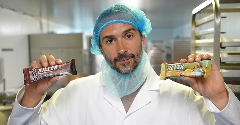
Will Wicks’ Killer Bar harm the protein bar category?
23 Oct 2025
Joe Wicks’ deliberately dangerous protein bar is fuelling anti-UPF sentiment – but there are concerns that his messaging is misguided and could have unintended consequences.
Read more
Expanding boundaries in food & beverage innovation
23 Oct 2025
IMCD and FrieslandCampina Professional expand partnership to deliver Kievit® across EMEA, enabling brands to enhance quality and accelerate time-to-market for tomorrow’s food & beverage creations.
Read more