
News
National dietary recommendations must be revised to account for sustainability, warns study
19 Jul 2022
The composition and quantity of animal product recommendations in national dietary guidelines should be revised in line with circular food system principles, new research suggests.
The study, published in The Lancet Planetary Health, is the first study that assesses environmental consequences and nutritional contributions of national food-based dietary guidelines while considering circular food system principles.
Led by Anita Frehner, PhD, from the Research Institute of Organic Agriculture (FiBL), Switzerland, and Wageningen University & Research, Netherlands, the authors behind the study said that national food-based dietary guidelines are generally designed from a human health perspective and often disregard sustainability aspects. However, they noted that circular food production systems are a promising solution to achieve sustainable healthy diets.
They added that while many studies have investigated the nutritional and environmental consequences of adhering to dietary guidelines, and a large number have assessed nutritional and environmental consequences of adopting specific national dietary guidelines, none have investigated the compatibility of animal-source food recommendations with circularity principles.
“Although we found that all national guidelines recommend more and different animal-source food than would be optimal from a resource-use and environmental perspective, we also reported substantial differences between the five case study countries,” said the authors – adding that the findings ‘stress the importance’ of including environmental considerations in national guidelines, and provide an estimate for potential targets for the inclusion of circular livestock in dietary guidelines as well as in current diets.
Can dietary guidelines include circularity principles?
Frehner and colleagues investigated whether the national dietary recommendations for animal products from Bulgaria, Malta, the Netherlands, Sweden, and Switzerland could be met with domestically available low-opportunity-cost biomass (LOCB) – such as processed by-products, food waste, and grass resources.
“We used an optimisation model that allocates feed resources to different species of farm animals. Of the resulting scenarios, we assessed the nutritional feasibility, climate impact, and land use,” explained the international team.
Results showed environmental benefits for reducing the recommended animal products in national FBDGs – and specifically found that animal products from LOCB could provide between 22% (Netherlands) and 47% (Switzerland) of total protein contributions of the FBDGs.
“Although the animal product recommendations in the national dietary guidelines of Bulgaria, Malta, the Netherlands, Sweden, and Switzerland are, neither in their composition nor in their total nutritional value, achievable with animal products from LOCB, 45–88% of the protein from animal product recommendations could be met with the proposed circularity principles,” said Frehner and colleagues.
Furthermore, Sweden and the Netherlands could reduce greenhouse gas emissions (12% and 24%, respectively) and reduce land use (22% and 24%, respectively), they said.
Dietary guidelines give a ‘distorted view’ on sustainability
The concluded that modifications to national dietary guidelines resulting in reductions to the recommended amount of animal products in diets have the potential to reduce greenhouse gas emission, and that the use of circularity principles in agriculture could allow for improved land use.
“This study provides further evidence that circular food production systems are a promising solution to achieve sustainable healthy diets,” commented study co-author Professor Mario Herrero from Cornell University, USA.
Frehner commented that in view of current and future challenges such as climate change, it is ‘inevitable’ that dietary recommendations will evolve to consider environmental sustainability within boundaries for healthy eating.
“Right now, the dietary recommendations that people base their food choices on give a distorted view of the planetary impact of what they eat,” said study co-author Renée Cardinaals from Wageningen University & Research.
Source: Frehner, et al. The Lancet Planetary Health (2022). DOI: 10.1016/S2542-5196(22)00119-X
Related news
Soy story: WWF scores UK supermarkets on sustainability efforts
12 Nov 2025
WWF has published its latest “Soy Scorecard”, ranking UK supermarkets’ efforts to combat deforestation and land conversion in their soy supply chains.
Read more
Standing Ovation and Bel scale up casein production from dairy co-products
11 Nov 2025
Foodtech company Standing Ovation has partnered with cheese specialist Bel Group to manufacture dairy serums for industrial-scale casein production via precision fermentation.
Read more
New UPF standard hoped to offer consumers ‘coherence and clarity’
10 Nov 2025
Ingredients companies are being urged to enter “a new era of partnership and innovation” following the launch of the industry’s first non-UPF verification scheme.
Read more
Whistleblowers accuse UK meat industry of promoting cheap, unsustainable supply
7 Nov 2025
An anonymous group of industry insiders has accused the UK’s biggest food companies of systematically driving down meat quality and welfare standards.
Read more
Bord Bia presents Irish dairy ingredient suppliers at Fi Europe
6 Nov 2025
Dairygold Co-operative Society, The Carbery Group, and Ornua Co-operative: Meet with sustainable producers of Irish dairy ingredients at Food ingredients Europe 2025, Hall 7.2 Stand M18.
Read more
AI attraction means foodtech startups must ‘prove’ rather than ‘promise’
4 Nov 2025
Reports suggest that artificial intelligence (AI) is sucking investment from foodtech and agritech, but investors say the picture is complicated.
Read more
Penguin and Club bars no longer classed as chocolate
30 Oct 2025
Penguin and Club bars can no longer be classified as chocolate after the pladis-owned McVitie’s brands turned to cheaper alternatives amid the ongoing cocoa crisis.
Read more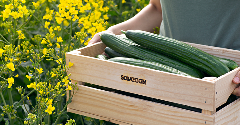
Could plant-based protection replace plastic packaging?
29 Oct 2025
Swedish foodtech company Saveggy has launched an additive-free plant-based protection for cucumbers, offering a waste-free packaging solution for fruit and vegetables.
Read more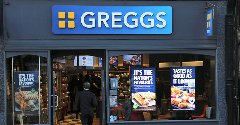
Does promoting protein content push up plant-based sales?
27 Oct 2025
Promoting the protein content of meat-free products is a more effective sales strategy than adding carbon labels, a study of UK bakery chain Greggs suggests.
Read more
Amazon Grocery launch aims to balance quality with affordability
22 Oct 2025
Global e-commerce giant Amazon has introduced a new private-label food brand, combining existing Amazon Fresh and Happy Belly products with new everyday items.
Read more