
News
‘Miffy eats the rainbow’: Tips to market fruit and vegetables to kids
25 Mar 2024Using a playful and colourful approach with storytelling can encourage children to try new varieties of fruit and vegetables, according to an ongoing Wageningen University study called ‘Miffy eats the rainbow’.
Netherlands-based Wageningen University & Research launched the ‘Miffy’s eat the rainbow’ marketing initiative to encourage fruit and vegetable consumption among children. The campaign and study into the role Miffy’s story and marketing efforts have on child nutrition may have the potential to bolster public health and company’s marketing efforts while spurring new product developments (NPDs).
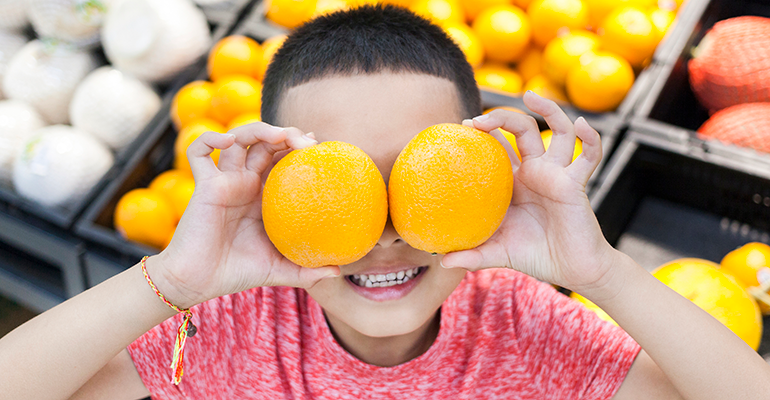
Drivers behind the marketing campaign and study
The ‘Miffy eats the rainbow’ method aims to encourage children to try new types of fruits and vegetables in a playful manner. Researchers in the Netherlands are currently conducting a study to explore the method’s effectiveness in encouraging children to increase their intake of fruits and vegetables. The campaign is designed to make healthy eating an engaging and enjoyable experience for children.
Researchers at the Dutch University have collaborated with Mercis, the rights agency and publisher of Dick Bruna’s books, to develop the creative approach. The study delves into whether parents can encourage their children to try new varieties of fruits and vegetables through a playful and colourful approach.
Drawing on storytelling and characters, the study may also offer insights into the impact creativity and playfulness have on promoting nutrition in children and people consuming different food groups.
Increasing fruit and vegetable intake
Wageningen University & Research’s personnel detail that although consuming an adequate amount of fruits and vegetables sets the foundation for a healthy diet, many children in the Netherlands do not consume sufficient quantities of the nutritious food group.
Studies show that approximately 95% of children between the ages of four and eleven don’t meet the daily recommended intake of vegetables, the University said. Furthermore, 2 out of 5 children currently meet the recommended intake for fruits and vegetables, indicating that, on average, these children eat less than half the recommended amount of vegetables.
In exploring ‘Miffy’s eat the rainbow’ initiative, the researchers highlight the importance of a healthy diet to prevent weight and health issues in children. Upon announcing the study, the researchers detail how, between 2018 and 2021, 12% of children aged between two and 12 were overweight, while 3% were considered obese.
The ‘Miffy eats the rainbow’ method
Researchers at the University want to investigate whether the ‘Miffy eats the rainbow’ method helps children learn to eat more, and various types of, fruit and vegetables. The marketing campaign encourages parents and caregivers to read the Miffy story to their children, which encourages people to eat fruits and vegetables that are ‘all the colours of the rainbow’.
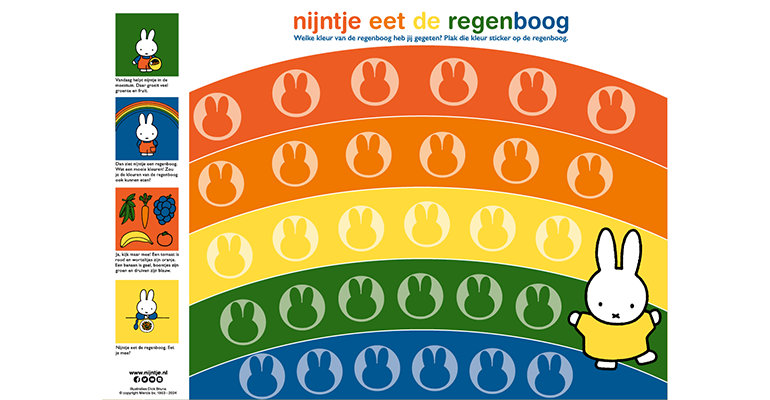 © Wageningen University & Research
Following the method, parents and caregivers place a sticker on a poster indicating the specific colour of the fruit or vegetable a child eats. By providing a visual system to depict a child’s fruit and vegetable intake, the branding highlights how “the child eats all the colours of the rainbow, just like Miffy.”
Trialling the concept, ‘Miffy eats the rainbow’ stickers are currently available in the Netherlands until the 23rd of March and can be placed on the matching poster. Parents or caregivers can download the ‘Miffy eats the rainbow’ poster, complete a questionnaire and participate in the study.
The creativity and nutrition connection
The research study, which is currently underway, raises the question of how public health and brands’ marketing strategies can embrace play, creativity and imagination to encourage nutrition and encourage the intake of fruit and vegetables.
In a recent 2024 narrative review study, researchers explored the role personality traits play in healthy habits and behaviours. They found that through their analysis, various studies have indicated that personality traits affect the eating habits and types of diets that individuals choose, including their preference for healthy or unhealthy foods.
Primary-school-aged children inspire their peers and families to eat more vegetables in the KiiDSAY project, a 2024 study has found. Engaging in qualitative research with children, the researchers concluded that children’s inputs hold significant potential for informing future interventions, especially when designing or refining school-based nutrition programmes and future research and practice.
The children in the study provided suggestions on how to promote vegetable consumption, which included cooking activities at-home and in school settings using recipes that creatively hide, mask or enhance vegetables’ taste, using positive role models and creating supportive school environments.
Related news

Bone broth: From old-fashioned to en vogue
24 Nov 2025
OXO’s entry into bone broth has turned the spotlight on this small but high-performance category – and there is still scope for growth, especially in the area of GLP-1 support.
Read more
UK Government overhauls childhood obesity strategy
21 Nov 2025
The UK Government has announced a new package of measures designed to reverse the nation’s childhood obesity epidemic following the release of statistics revealing the scale of the crisis.
Read more
Nitrites: Pressure grows on UK to follow EU’s lead
20 Nov 2025
Pressure is growing on the UK to follow the EU’s lead after the bloc revised its regulations on the permitted levels of nitrites and nitrates in cured meats.
Read more
Matcha madness: Why green is this year’s hottest colour
19 Nov 2025
Five years ago, it was a struggle to find matcha outside of Japan. Now it seems to be popping up everywhere, from coffee shops to supermarket shelves.
Read more
How younger consumers are redefining ingredient choices and rejecting brand loyalty
18 Nov 2025
Gen Z and millennial consumers’ preferences for transparency, functionality, and purpose are “redefining the very nature of consumption itself”, says SPINS.
Read more
Hybrid formats and flexible positioning to disrupt category norms in 2026
17 Nov 2025
Trend forecasters expect food and drink to move more fluidly across occasions, functions, and formats as consumers seek versatility, novelty, and convenience.
Read more
Danone highlights digestive health as potential ‘tipping point’ for food industry
13 Nov 2025
Danone is betting on a food industry “tipping point” that will bloat the market for healthy products, particularly those related to gut health.
Read more
Soy story: WWF scores UK supermarkets on sustainability efforts
12 Nov 2025
WWF has published its latest “Soy Scorecard”, ranking UK supermarkets’ efforts to combat deforestation and land conversion in their soy supply chains.
Read more
New UPF standard hoped to offer consumers ‘coherence and clarity’
10 Nov 2025
Ingredients companies are being urged to enter “a new era of partnership and innovation” following the launch of the industry’s first non-UPF verification scheme.
Read more
Cottage cheese makes a comeback as consumers call for cleaner labels
6 Nov 2025
From ice cream to dips and ready meals, cottage cheese is experiencing a renaissance as a high-protein, clean ingredient for health-conscious consumers.
Read more