
News
Marketing healthy food as fun can have a big impact on kids
7 Sep 2023
Some retailers and brands are finding creative ways to better promote fresh fruit and vegetables to kids such as hard discounter Lidl’s cartoon characters, Banana-Llamas and Tawny Tomatowl.
Food with a focus on health and wellness is growing in popularity across all categories and demographics, particularly kids’ food, beverages, and snacks. However, children today are exposed to unprecedented amounts of advertising in their daily lives, and the negative impact of unhealthy food marketing has become a major challenge for parents.
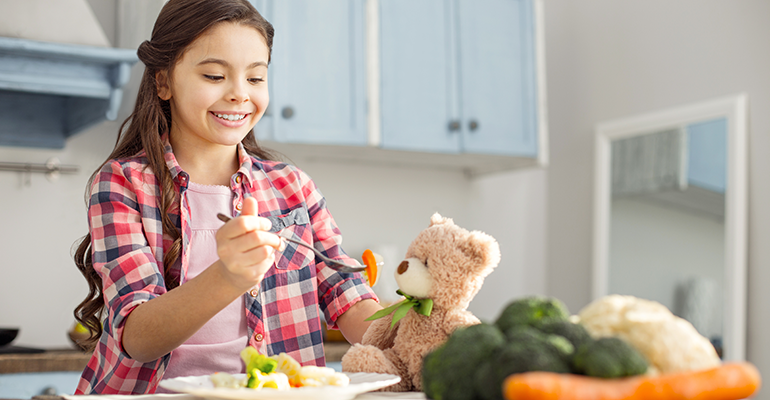
Kids are often enticed by the appealing branding of processed, high-calorie and sugar-laden snacks and drinks, which usually feature fun cartoon characters and brightly coloured designs. Healthy food rarely gets the same treatment, and children are less likely to be drawn to this bland, straightforward packaging.
For example, discount grocer Lidl UK has been encouraging supermarkets to introduce packaging that make fruit and vegetables appeal more to children, arguing that its own efforts to do so have been successful. Government agencies are also stepping up to offer recommendations on food marketing policies to protect children.
Making fruit and veg more appealing
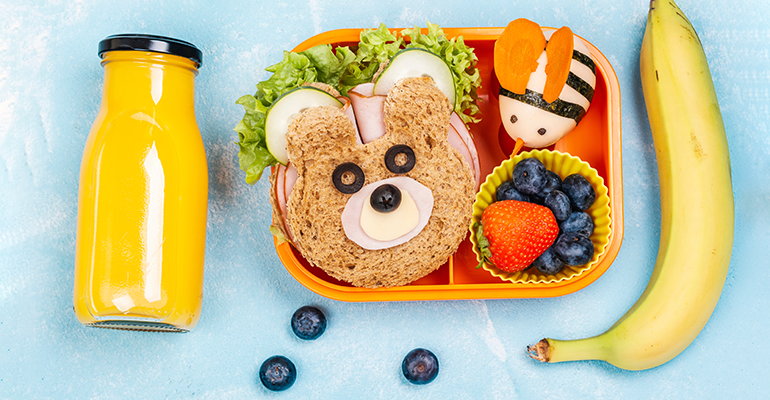
In May, Lidl GB said that sales of its specially designed Oaklands Funsize fruit range have increased by more than one-third since being introduced in 2017. It consists of fresh fruit and veg with fun names and cartoon characters, like Banana-Llamas and Tawny Tomatowl.
Lidl also confirmed it will remove cartoon characters from packaging of all unhealthy products by spring 2024. The retailer already redesigned its cereal packaging in 2020 to remove cartoons that advertised to children.
 © AdobeStock/happy_lark
“This is something that’s so simple for us supermarkets to change, and our results show the positive impact that these small changes can make. We hope other supermarkets follow in our footsteps so that, as a sector, we can be confident we’re doing all we can to support parents in helping to improve the diets of the next generation,” said Peter de Roos, chief commercial officer at Lidl GB.
EU non-profit Safe Food Advocacy Europe (SAFE) said it approved of Lidl’s plan to make fresh produce more appealing to kids. The organisation was created with the aim of ensuring that consumers’ health and concerns remain at the core of the EU’s food legislation.
“SAFE welcomes this initiative, as children are often the target of aggressive marketing on unhealthy and ultra-processed food products,” SAFE said, citing data from a Canadian study that found that packaged foods marketed specifically to appeal to children were significantly higher in sugar and lower in other nutrients than foods not targeted to children.
Tackling ‘harmful’ unhealthy food marketing
The World Health Organization (WHO) announced the launch of its new guidelines in May for protecting children from unhealthy food marketing. Its Department of Nutrition and Food Safety said that “harmful food marketing to which children are exposed can and should be regulated”.
“Children and adolescents continue to be exposed to powerful food marketing in settings where they gather (e.g., schools, sports clubs), or through their favourite media, including television channels and digital spaces,” WHO said.
 © AdobeStock/Ojas
“Such marketing predominantly promotes less healthy food options, such as sugar-sweetened beverages, chocolate, and confectionery, and uses a wide variety of marketing strategies that are likely to appeal to children, including celebrity/sports endorsements, promotional characters, product claims, gifts/incentives, tie-ins, competitions, and games. Such marketing negatively shapes children’s food preferences, their food choice and dietary intake.”
Australia’s VegKIT initiative
In Australia, the government has recently sponsored research to compile best practice guidelines for manufacturers for increasing children’s vegetable intake.
The VegKIT guide cites data from a 2018 national survey that found that only 6% of Australian children and adolescents eat the recommended amount of vegetables.
The VegKIT guide advises that the food industry has significant influence on things like making vegetables available at home and school and educating parents on healthy eating. It recommends that food manufacturers harness the bright colours and sweet tastes of vegetables that appeal most to children and use that alongside fun names and characters to draw their attention, similar to processed food marketing strategies.
“Vegetables need to be made the hero of children’s and family meals or snacks so that children become familiar with them and even love them,” VegKIT said. “Plant-based nutrition and snacking is trending, which means that the time is ripe to consider how your product range might include a product that makes vegetables the hero.”
Related news

UK Government overhauls childhood obesity strategy
21 Nov 2025
The UK Government has announced a new package of measures designed to reverse the nation’s childhood obesity epidemic following the release of statistics revealing the scale of the crisis.
Read more
Nitrites: Pressure grows on UK to follow EU’s lead
20 Nov 2025
Pressure is growing on the UK to follow the EU’s lead after the bloc revised its regulations on the permitted levels of nitrites and nitrates in cured meats.
Read more
How younger consumers are redefining ingredient choices and rejecting brand loyalty
18 Nov 2025
Gen Z and millennial consumers’ preferences for transparency, functionality, and purpose are “redefining the very nature of consumption itself”, says SPINS.
Read more
Soy story: WWF scores UK supermarkets on sustainability efforts
12 Nov 2025
WWF has published its latest “Soy Scorecard”, ranking UK supermarkets’ efforts to combat deforestation and land conversion in their soy supply chains.
Read more
New UPF standard hoped to offer consumers ‘coherence and clarity’
10 Nov 2025
Ingredients companies are being urged to enter “a new era of partnership and innovation” following the launch of the industry’s first non-UPF verification scheme.
Read more
Could plant-based protection replace plastic packaging?
29 Oct 2025
Swedish foodtech company Saveggy has launched an additive-free plant-based protection for cucumbers, offering a waste-free packaging solution for fruit and vegetables.
Read more
Does promoting protein content push up plant-based sales?
27 Oct 2025
Promoting the protein content of meat-free products is a more effective sales strategy than adding carbon labels, a study of UK bakery chain Greggs suggests.
Read more
NMN: An on-trend ‘fountain of youth’ ingredient for anti-ageing products
24 Oct 2025
Dubbed an “on-trend fountain of youth ingredient” by Mintel, NMN is booming in anti-ageing ingestible products in Asia – but regulatory roadblocks are thwarting NPD efforts elsewhere, say experts.
Read more
Will Wicks’ Killer Bar harm the protein bar category?
23 Oct 2025
Joe Wicks’ deliberately dangerous protein bar is fuelling anti-UPF sentiment – but there are concerns that his messaging is misguided and could have unintended consequences.
Read more
Amazon Grocery launch aims to balance quality with affordability
22 Oct 2025
Global e-commerce giant Amazon has introduced a new private-label food brand, combining existing Amazon Fresh and Happy Belly products with new everyday items.
Read more