
News
Lycored declares natural colourings "super stable"
26 Jul 2018A new batch of carotenoid-derived colours from Lycored has proved to be “super-stable” in hard coated candy and vitamin-enriched gummies, the company reports.

A new batch of carotenoid-derived colours from Lycored has proved to be “super-stable” in hard coated candy and vitamin-enriched gummies, the company reports. Research has, it says, shown that the use of natural colours does not diminish the appeal of candy to children and actually enhances it for parents.
Lycored’s Tomat-O-Red (pinks to reds) is sourced from lycopene from tomatoes, while Lyc-O-Beta (yellows and oranges) is extracted from beta-carotene.Initially, tests were carried out to check the performance of these carotenoid-derived colours in vitamin-enriched gummies. This included accelerated and real-time shelf-life stability on gummies coloured with six different Lycored shades. They were compared with samples produced by the same manufacturer but coloured artificially. The Lycored-colored gummies contained vitamin C, but the artificially coloured alternatives did not. The natural colours from Lycored all remained true to fruit in their natural colour hues and their stability was strong under intense light conditions, according to the company, and similar to that of the synthetic colours. This was the case despite the additional stress of vitamin C content, which disrupts the stability of some colorants.Lycored also looked into the performance of its carotenoid-derived colours during the rigorous hard-coating, panning process in hard-coated confectionery. The solutions were tested in two different coatings for candy – Quick White from Norevo and titanium dioxide.The formulations, in shades of red, yellow and orange, were tested for four weeks at temperatures of 20°C, 25°C, 30°C, and 35°C in clear plastic bags and in a humidity-controlled environment.The investigation showed that all colours performed very well with good quality shades in both coatings. Christof Ruttgers, Confectionery Technologist at D&F Drouven, who carried out the research, remarks on their user-friendliness compared to other colour sources. “Water-soluble reds can be challenging to work within confectionery as they often become white or dusty when sugar crystals form,” he says. “This is the case with synthetics and maltodextrin-based colors, as well as vegetable, concentrates such as beets.”“However the Lycored colours we tested are oil-based, which makes them much more resilient.”Lycored’s consumer research also revealed that natural colours are not a deal-breaker for children. The company wanted to get some insights into how children and their parents perceive colour in candies. Interviews with ten children and their parents were conducted with each pair being sent a bag of gummies coloured naturally with Tomat-O-Red and Lyc-O-Beta and another made by the same manufacturer but coloured artificially.Both the children and their parents were able to distinguish between the naturally coloured candies and the artificial ones. However, although the children tended to prefer the brighter, artificial colours, they were enthusiastic about eating all of them, says Lycored. The parents said that ideally, they would prefer to feed their kids healthy options and if all other factors, such as taste, were similar they would buy candy-coloured naturally. Some said they would be willing to pay more for naturally coloured versions of candy they already buy.“For kids, candy is candy and taste is king. They might notice that artificially coloured products look brighter, but colour definitely isn’t a deal-breaker. And when their parents realize that naturally coloured products taste exactly the same, factors like clean label and naturality come back into play,” said Christiane Lippert, Head of Marketing, Food, at Lycored.“Meanwhile, we’re delighted that two more stability trials have demonstrated the high performance of our natural colors in yet another category.”Companies mentioned

Related news

Oat Barista: Innovation for game-changing beverages
20 Nov 2025
Oat Barista is a clean label, sustainable, and innovative drink base specifically designed to create the perfect foam in one single ingredient.
Read more
Empowering innovation in fortification and colouration
13 Nov 2025
Divi’s Nutraceuticals offers a large portfolio of innovative, high-quality ingredients for foods, beverages, and supplements, with bespoke solutions and expert support for product success.
Read more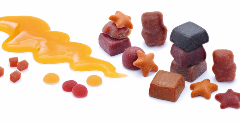
From fruit to functional solutions: Meet Paradise Fruits at Fi Europe in Paris
13 Nov 2025
Paradise Fruits Solutions and Paradise Fruits Health will showcase their combined expertise in delivering innovative, fruit-based solutions to the food and beverage industry at the upcoming Fi Europe trade show (2-4 December 2025, Paris).
Read more
New UPF standard hoped to offer consumers ‘coherence and clarity’
10 Nov 2025
Ingredients companies are being urged to enter “a new era of partnership and innovation” following the launch of the industry’s first non-UPF verification scheme.
Read more
Cottage cheese makes a comeback as consumers call for cleaner labels
6 Nov 2025
From ice cream to dips and ready meals, cottage cheese is experiencing a renaissance as a high-protein, clean ingredient for health-conscious consumers.
Read more
Bord Bia presents Irish dairy ingredient suppliers at Fi Europe
6 Nov 2025
Dairygold Co-operative Society, The Carbery Group, and Ornua Co-operative: Meet with sustainable producers of Irish dairy ingredients at Food ingredients Europe 2025, Hall 7.2 Stand M18.
Read more
Shorter drying time, sweeter success!
30 Oct 2025
Curious about cost-effective, sustainable and delicious candy making? Stefan Wessel reveals how Avebe’s solutions reduce drying time and energy use by up to 50%.
Read more
Could plant-based protection replace plastic packaging?
29 Oct 2025
Swedish foodtech company Saveggy has launched an additive-free plant-based protection for cucumbers, offering a waste-free packaging solution for fruit and vegetables.
Read more
Will Wicks’ Killer Bar harm the protein bar category?
23 Oct 2025
Joe Wicks’ deliberately dangerous protein bar is fuelling anti-UPF sentiment – but there are concerns that his messaging is misguided and could have unintended consequences.
Read more
Expanding boundaries in food & beverage innovation
23 Oct 2025
IMCD and FrieslandCampina Professional expand partnership to deliver Kievit® across EMEA, enabling brands to enhance quality and accelerate time-to-market for tomorrow’s food & beverage creations.
Read more