
News
Japanese-inspired umami products expand into global consumer markets
17 May 2024Brands are responding to shoppers' interest in cooking ingredients with deep flavours, by launching new products that emphasise umami-rich flavours inspired by Japanese cuisine.
An umami substance in Japanese cooking is typically delicate and complex. Popular ingredients include soy sauce, miso paste, shiitake mushrooms, kombu, and katsuobushi.
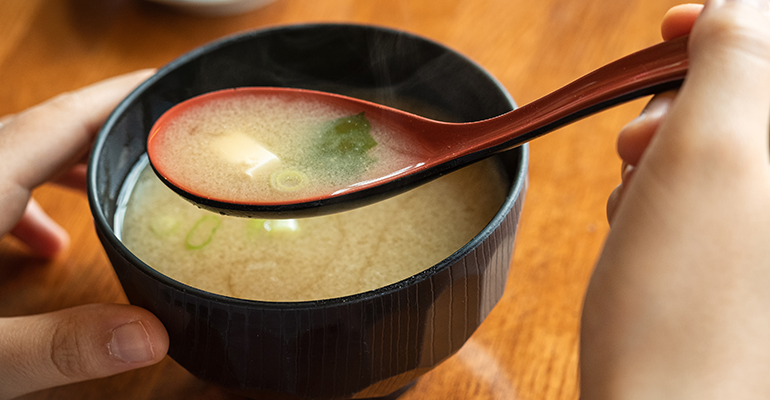
“We believe the recent popularity of umami can be attributed to the growing worldwide interest in Washoku [a traditional style of Japanese cooking], [which is] driven by growing health and environmental awareness,” a spokesperson from Japan’s Umami Information Center told Ingredients Network.
Washoku-led launches
Cooking ingredients and products focusing on umami-enhancement and Washoku are entering the market. Food producer Kokonoe Mirin unveiled its Mirin Okomedake for the first time in the UK via Japanese ingredient online retailer Wasabi Company. Mirin, made from sticky rice, rice shochu, and malted rice, is a common ingredient in cooking. The product is designed for “a refined natural sweetness and a deep umami” in robust dishes with strong-tasting meats and fish.
The online store Wasabi Company features’ umami boosters’ designed to add rich, savoury flavours to meat dishes, stir-fries, and soups. Kochia Scoparia Tonburi’s Field Caviar, suitable for vegan and vegetarian consumers, comprises 100% Kochia scoparia seeds. The edible seeds contain antioxidants, potassium, fibre, phosphorus, and folic acid.
Hinode’s Sakura Cherry Wood Smoked Rice Vinegar, a vegan and vegetarian product, is designed as a glaze, a marinade for fish or meat dishes, or an addition to salad dressings. Another vegan and vegetarian product offering geared towards enhancing umami flavours is Goto Soy Sauce Co’s Gyoza Sauce. It features kombu seaweed and vegetables such as leek, daikon radish, shiitake, and enoki mushrooms to boost the umami richness.
In March 2024, Japanese Otsuka Foods announced it was preparing to launch two new “Bon Curry Umami wo Ajiwau Curry Udon no Moto” (Bon Curry Umami-Rich Curry Udon Noodles Topping) products, the first from the Bon Curry brand to be made especially for use with curry udon noodles.
Dishes with dashi
While the cuisines of many countries worldwide consist mainly of fats and oils to make up the deliciousness characterised by umami substances, Washoku is composed primarily of dashi. Retaining its ability to enhance natural ingredient flavours to make them more palatable and satisfying, dashi is considered “less bland than soup stocks from other countries”, the spokesperson says.
“Dashi bouillon of Washoku specialises only in umami components such as glutamate, inosinate, and guanylate,” adds the Umami Information Center’s spokesperson.
Glutamate, found in a variety of foods, including meat, fish, and vegetables, is one of the most popular types of umami currently in this space. Dried mushroom products also contain high amounts of glutamate, the spokesperson adds. Inosinate is also appealing and is found in generous quantities in animal-based foods such as meat and fish.
Yutaka Foods Dashi-Tori Shokunin Premium Umami Dashi Stock is an example of a dashi-based product. The made-in-Japan soup stock contains seaweed salt and is shipped to US and UK customers via The Japan Centre store. Katsuo dashi stock from dried and smoked skipjack tuna makes 160-200 ml of dashi and is recommended for soups and stews.
Dashi is part of consumer product offerings ranging from broths and ramen noodle soup bases to pastes, including umami-enhancing products like Cooks’ Ingredients, Bart, and stock paste, to seasoning sauces like Yondu.
Global launches
Umami seasoning in other food cultures might include Worcestershire sauce, oyster sauce, tomato paste, malt vinegar, or fish sauce, often with lemon juice.
Designed to help consumers rediscover the pleasure of food after experiencing changes to taste and smell, UK health and wellbeing store Holland & Barrett launched its umami-centric product collection in January 2024. The range comprises sensation salt, miso honey, soy & honey umami paste, and white chocolate & miso raspberries.
Following the release of its fish ball laksa, which it hailed as a “world first”, and partnering with Ingredion to launch its fish cakes and fillets, Singaporean startup UMAMI Bioworks is teaming up with Shiok Meats to bring cultivated seafood to the Asian region in 2025. Starting with the release of its eel product, the duo strives to develop their combined cultivated eel, groupers, halibut, and cell-based crustacean offerings to reach consumers in line with regulatory timelines.
Current research drives B2C vegan launches
In 2023, University of Copenhagen researchers found umami was an important factor in consumers’ expectations of plant-based foods, stating: “For PB beef alternatives, the products in the category should have a more umami taste and beef-like taste and odour.”
The Good Food Institute’s new State Of The Industry report, published in April 2024, highlighted how the Dutch company Revyve introduced an egg white replacer made from upcycled spent brewer’s yeast. This replacer can be used as a binder in plant-based meats and adds an umami flavour.
Companies such as Belgium’s Bolder Foods and Finland’s BioMush are also working on developing umami flavours for consumers to access through new product developments (NPDs).
Researchers at Wageningen University and Research in the Netherlands are developing a fermentation method similar to tempeh production. This method has produced a prototype product with large concentrations of umami flavours associated with meat.
Related news

NMN: An on-trend ‘fountain of youth’ ingredient for anti-ageing products
24 Oct 2025
Dubbed an “on-trend fountain of youth ingredient” by Mintel, NMN is booming in anti-ageing ingestible products in Asia – but regulatory roadblocks are thwarting NPD efforts elsewhere, say experts.
Read more
Food security-insecurity gap grows, hitting vulnerable regions hardest
16 Oct 2025
While food security has increased in most countries, the world’s most vulnerable nations’ struggles continue and intensify, a USDA analysis reveals.
Read more
India’s biscuit and cookie consumers want extra indulgence
16 Sep 2025
Premiumisation, health consciousness, and a focus on texture are driving new product developments (NPD) in the Indian biscuit and cookie market, Mintel figures suggest.
Read more
Climate change threatens matcha supplies as social media fuels matcha mania
8 Sep 2025
Matcha’s popularity is rising across the globe, yet shrinking harvests caused by record-breaking heatwaves in Japan are dwindling global supplies.
Read more
Australia's snacking sector achieves near-universal appeal
22 Aug 2025
As many as 99% of Australian consumers snack daily, with generational differences and increasing demands presenting novel manufacturing opportunities, according to Mintel data.
Read more
World Food Safety Day shines a spotlight on science
19 Jun 2025
On 7 June, the World Health Organization (WHO) held its annual World Food Safety Day, highlighting the role scientific research and innovation play in supporting consumers’ health.
Read more
Africa and Middle East most vulnerable markets to food fraud
28 May 2025
Consumers in Africa and the Middle East face a higher risk of consuming adulterated foods – especially with tariffs causing chaos in the global food supply chain, experts warn.
Read more
East takes on West in the fight for future food flavours
30 Apr 2025
Asian and South American flavours are now key components on global menus, driven by a growing global appetite for culinary mashups.
Read more
Will Trump lower tariff hikes?
25 Apr 2025
The US President’s plan to reduce the 145% tariffs on China’s food and beverage market raises questions over whether a turnaround is likely for other regions.
Read more
Future F&B flavours favour exploration and explosive taste profiles
25 Mar 2025
Exploration and experimentation will define the future of flavour, according to Mintel, as consumers seek out taste profiles and textures that offer an adventurous eating experience.
Read more