
News
Imagindairy ferments casein and whey, expects launch in two years
1 Jul 2021Israeli startup Imagindairy is aiming to take cows out of the dairy equation entirely with its animal-free casein and whey proteins that it has developed over the course of 15 years of research. The company says that its proprietary fermentation technology creates analogous dairy proteins that have the flavor, texture and functionality of their animal counterparts.
Within three to five days, Imagindairy takes yeast and converts it through precision fermentation into a protein that is “indistinguishable” from cow-based options except for the fact that it is non-dairy and lactose-free. It also has no cholesterol, GMOs, and a minimal impact on the environment.

Consumers continue to seek out products that are better for the environment than options that have long been available on supermarket shelves. This means that animal dairy has progressively been pushed aside in favor of plant-based options such as almond and oat milk, both of which categories grew enormously in 2020. Sales of oat milk reached $213.35 million in the 52 weeks before Sept. 6, 2020, up 350.8% from 2019, according to SPINS data. Almond milk, the largest plant-based milk variety in terms of market share, brought in $1.497 billion in that same 52-week period.
However, there are hidden costs associated with these alternatives. Pesticide exposure from growing mass quantities of almonds and oats has damaged the environment and has even been shown to be detrimental to bee colonies that are sent to winter in California almond groves, The BBC reported.
Imaginedairy hopes to alleviate some of these environmental costs through its engineered proteins. “I look forward to being able to give my kids such treats as a cup of nutritious, tasty milk or creamy yogurt without the hard impact on animals or on the environment they must inherit,” Imagindairy CEO Eyal Afergan said in a statement.
To take its research out of the lab and provide consumers with the opportunity to try products made with its whey and casein proteins, the company said that it will begin commercialization with a B2B strategy. It expects its first proteins will become available in two years to food brands that will then be able to begin incorporating them into their formulations.
On its path to disruption, Imagindairy will need funding. Already, the Israeli startup raised $1.5 million in seed funding in a round led by The Kitchen FoodTech hub, with contributions from the Israeli Innovative Authority, CPT Capital, New Crop Capital, and Entrée Capital. However, in its release, the company noted that it will soon enter its Series A funding round.
Related news

Oat Barista: Innovation for game-changing beverages
20 Nov 2025
Oat Barista is a clean label, sustainable, and innovative drink base specifically designed to create the perfect foam in one single ingredient.
Read more
Nitrites: Pressure grows on UK to follow EU’s lead
20 Nov 2025
Pressure is growing on the UK to follow the EU’s lead after the bloc revised its regulations on the permitted levels of nitrites and nitrates in cured meats.
Read more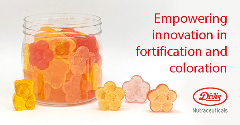
Empowering innovation in fortification and colouration
13 Nov 2025
Divi’s Nutraceuticals offers a large portfolio of innovative, high-quality ingredients for foods, beverages, and supplements, with bespoke solutions and expert support for product success.
Read more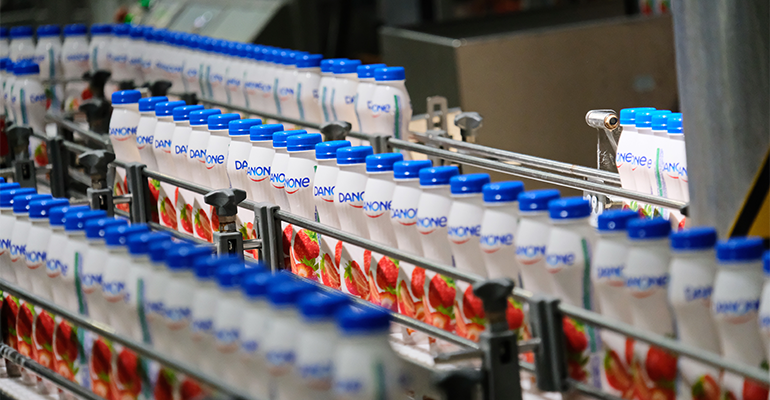
Danone highlights digestive health as potential ‘tipping point’ for food industry
13 Nov 2025
Danone is betting on a food industry “tipping point” that will bloat the market for healthy products, particularly those related to gut health.
Read more
Standing Ovation and Bel scale up casein production from dairy co-products
11 Nov 2025
Foodtech company Standing Ovation has partnered with cheese specialist Bel Group to manufacture dairy serums for industrial-scale casein production via precision fermentation.
Read more
AI attraction means foodtech startups must ‘prove’ rather than ‘promise’
4 Nov 2025
Reports suggest that artificial intelligence (AI) is sucking investment from foodtech and agritech, but investors say the picture is complicated.
Read more
Will postbiotics become the go-to functional ingredient?
3 Nov 2025
Postbiotics show significant promise for the functional foods market due to their safety profile and beneficial bioactive properties, research suggests.
Read more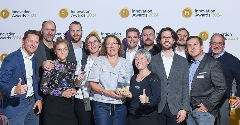
Meet the finalists of the Fi Europe Innovation Awards 2025
31 Oct 2025
Who made it to the shortlist of the Fi Europe Innovation Awards 2025? Read about the 23 companies making food and drink products healthier and manufacturing processes more efficient.
Read more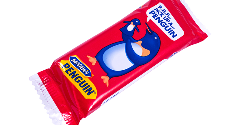
Penguin and Club bars no longer classed as chocolate
30 Oct 2025
Penguin and Club bars can no longer be classified as chocolate after the pladis-owned McVitie’s brands turned to cheaper alternatives amid the ongoing cocoa crisis.
Read more
Shorter drying time, sweeter success!
30 Oct 2025
Curious about cost-effective, sustainable and delicious candy making? Stefan Wessel reveals how Avebe’s solutions reduce drying time and energy use by up to 50%.
Read more