
News
Germany’s Veganz supermarket chain prepares for IPO
28 Oct 2021Germany's pioneering vegan company Veganz went public on Oct. 27 on the Regulated Unofficial Market (Freiverkehr) of the Frankfurt Stock Exchange (Frankfurter Wertpapierbörse), according to a release published on the company’s website. The initial offer period will end on Nov. 3, and the company set the price range for shares between €85.00 to €110.00.
Veganz is part supermarket chain, part vegan brand, and the latest plant-based company to seek to go public. Founded in Berlin in 2011, the vegan grocery purveyor has spent the last 10 years expanding into its own-brand product lines and currently has 120 products across 17 categories. These products are available on the shelves of 22,000 retail locations across Europe, including well-known chains such as EDEKA, REWE, Rossmann, dm, SPAR, Coop, LIDL and ALDI.
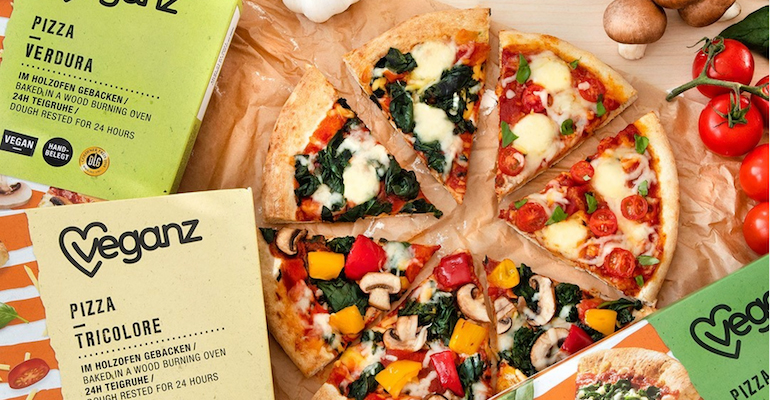
“[We] offer a highly innovative product range that is able to satisfy consumers’ needs from breakfast to dinner. We also believe that none of our competitors has a comparably broad range as we do,” said founder and CEO Jack Bredack in a statement.
Although the company’s portfolio is already expansive, the momentum from plant-based food has sent the corporation to the table to seek a public offering in hopes of further expanding both its product offerings through research and development as well as its global reach. Gross proceeds from its IPO are expected to generate up to €42.8 million.
As a part of its efforts to expand the number of products in its portfolio, Veganz said it will establish a new production site near Berlin, and various sources report that the company will focus its efforts on developing vegan cheese and plant-based seafood options – two of the fastest-growing segments within the plant-based category.
It is clear that the vegan company is already making strides toward its expansion goals. Last year, the company told Vegconomist that its revenues increased by 35% for the first half of 2020 to hit €13.1 million. The private company is looking to catapult that growth trajectory by making itself public.
Recently, a handful of well-known plant-based brands have turned to stock exchanges to search for growth. Beyond Meat was the first brand to make a splash on the scene with its highly publicized IPO in 2019 that was not only flashy but also successful. The company’s stock rocketed 163% on its first day of trading. Swedish brand Oatly also began trading on the U.S. stock exchange this year in a $1.4 billion (€1.2 billion) IPO that also saw a jump in the first day of trading but at a more modest 30%. Canada-based Odd Burger became the first publicly traded vegan fast-food chain to be publicly traded this spring when it had an IPO on the Toronto Stock Exchange’s Venture Exchange.
Related news

UK Government overhauls childhood obesity strategy
21 Nov 2025
The UK Government has announced a new package of measures designed to reverse the nation’s childhood obesity epidemic following the release of statistics revealing the scale of the crisis.
Read more
How younger consumers are redefining ingredient choices and rejecting brand loyalty
18 Nov 2025
Gen Z and millennial consumers’ preferences for transparency, functionality, and purpose are “redefining the very nature of consumption itself”, says SPINS.
Read more
New UPF standard hoped to offer consumers ‘coherence and clarity’
10 Nov 2025
Ingredients companies are being urged to enter “a new era of partnership and innovation” following the launch of the industry’s first non-UPF verification scheme.
Read more
Ingredient quantities mislabelled on popular protein bars, independent tests show
5 Nov 2025
Some popular protein bars contain more fat, carbs, and/or sugars than claimed on their labels, independent nutrition testing reveals.
Read more
Does promoting protein content push up plant-based sales?
27 Oct 2025
Promoting the protein content of meat-free products is a more effective sales strategy than adding carbon labels, a study of UK bakery chain Greggs suggests.
Read more
Supplement shoppers seek storytelling and science-backed suppliers
17 Oct 2025
Supplement consumers want specific health benefits that focus on prevention and personalisation, according to data from HealthFocus International.
Read more
Food fraud risks rise as brands fight economic and environmental headwinds
10 Oct 2025
Climate change, geopolitics, regulations, and demand for sustainable products are pushing up food fraud and adulteration risks, warns a world-leading food fraud expert.
Read more
The growing appeal of nutrient-dense food claims
2 Oct 2025
Nutrient-dense claims are rising as consumers reject the “empty calories” of UPFs in favour of products that provide meaningful nutrition with every calorie, Mintel data shows.
Read more
What does MAHA mean for the US nutraceutical industry?
30 Sep 2025
Industry associations have expressed mixed reactions to new policy directions on health and nutrition under the Make America Health Again (MAHA) banner.
Read more
Eco-Score labels improve consumer identification of sustainable foods
22 Sep 2025
The presence of a front-of-pack Eco-Score label improves consumers' accuracy in identifying sustainable food products from 52% to 72%, a study suggests.
Read more