
News
Food and Beverage Colours: Consumers Demand a Natural Rainbow
10 Sep 2013Colour influences our food choices more than we realise. The main purpose of colour ingredients in food and beverages is to offset the colour that is lost during processing, or to enhance the naturally occurring colour. Nobody wants a fruit flavoured drink that’s a pale shade of brown or canned vegetables that have a similar […]

Colour influences our food choices more than we realise. The main purpose of colour ingredients in food and beverages is to offset the colour that is lost during processing, or to enhance the naturally occurring colour. Nobody wants a fruit flavoured drink that’s a pale shade of brown or canned vegetables that have a similar hue to a dirty pond. Without colour ingredients, this would be the reality. Consumers also closely associate colour with flavour, with brighter colours in food associated with stronger, richer tastes. In recent years, research and development of natural product colours has focused on fruit, vegetable and plant extracts and concentrates – food’s original colour palette.
Colour ingredients are also used to attract consumers’ attention, with the use of vivid, playful colours in products such as sugar confectionery, ice cream and soft drinks. However, food safety has cast a shadow over brightly coloured foods in Europe after a group of researchers at Southampton University confirmed in 2007 that the consumption of several synthetic food colours, including allura red and sunset yellow and dubbed the ‘Southampton Six’, were associated with behavioural problems in children. Rather than being attracted to coloured products, European consumers now ask themselves “What is in that to make it so bright?” and “Is that coloured food safe for my child to consume?” While all food additives are scrupulously tested by the European Food Safety Authority, when it comes to colour ingredients the European preference is overwhelmingly natural.
This is not the case in other parts of the world – at least, not yet. Euromonitor data shows that in 2012, Asia Pacific consumed over a quarter of all synthetic food colours globally, making it the second largest consumer of synthetic food colours after the US. Awareness of the use of natural and synthetic ingredients in processed food remains low in this region – hence the relatively low demand for natural colours in comparison to Europe. However, a rising middle class in countries such as China, Indonesia and India, with an increased interest in food safety, has led to a rising demand for more natural and healthy ingredients, including natural colours. Given the size of the food and beverage market in Asia and its strong rate of growth – in 2017 it is expected that Asia Pacific will consume nearly as much packaged food as Western Europe and North America combined in volume terms – this region perhaps has the most potential for growth for natural food and beverages.
The US is the world’s largest market for natural product colours, consuming over 430,000 tonnes of natural product colours in food and beverage products in 2012. Germany is the only European market to feature in the largest five markets for natural products colours. Because of their sheer size, China, Mexico and Brazil are the second, third and fourth largest consumers of natural product colours in food and beverages globally.

Related news

Oat Barista: Innovation for game-changing beverages
20 Nov 2025
Oat Barista is a clean label, sustainable, and innovative drink base specifically designed to create the perfect foam in one single ingredient.
Read more
How younger consumers are redefining ingredient choices and rejecting brand loyalty
18 Nov 2025
Gen Z and millennial consumers’ preferences for transparency, functionality, and purpose are “redefining the very nature of consumption itself”, says SPINS.
Read more
Hybrid formats and flexible positioning to disrupt category norms in 2026
17 Nov 2025
Trend forecasters expect food and drink to move more fluidly across occasions, functions, and formats as consumers seek versatility, novelty, and convenience.
Read more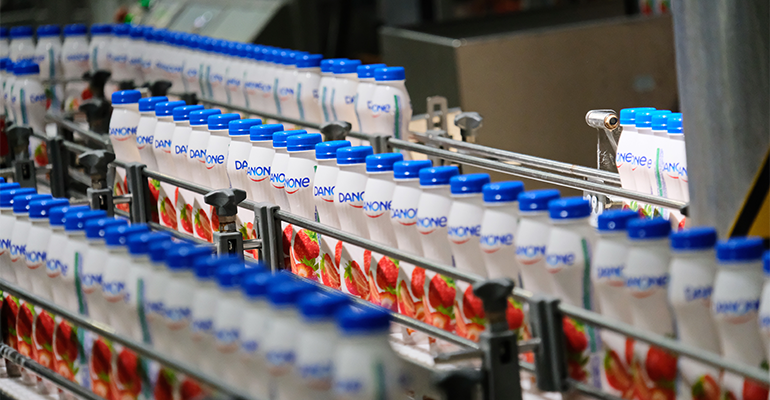
Danone highlights digestive health as potential ‘tipping point’ for food industry
13 Nov 2025
Danone is betting on a food industry “tipping point” that will bloat the market for healthy products, particularly those related to gut health.
Read more
New UPF standard hoped to offer consumers ‘coherence and clarity’
10 Nov 2025
Ingredients companies are being urged to enter “a new era of partnership and innovation” following the launch of the industry’s first non-UPF verification scheme.
Read more
Faravelli at Fi Europe: Showcasing FARA® functional solutions for food and nutra
28 Oct 2025
At Fi Europe 2025 in Paris (stand 72M39), Faravelli showcases FARA® Customized Functional Solutions and a wide ingredient portfolio for food and nutra – delivering quality, innovation, and expertise.
Read more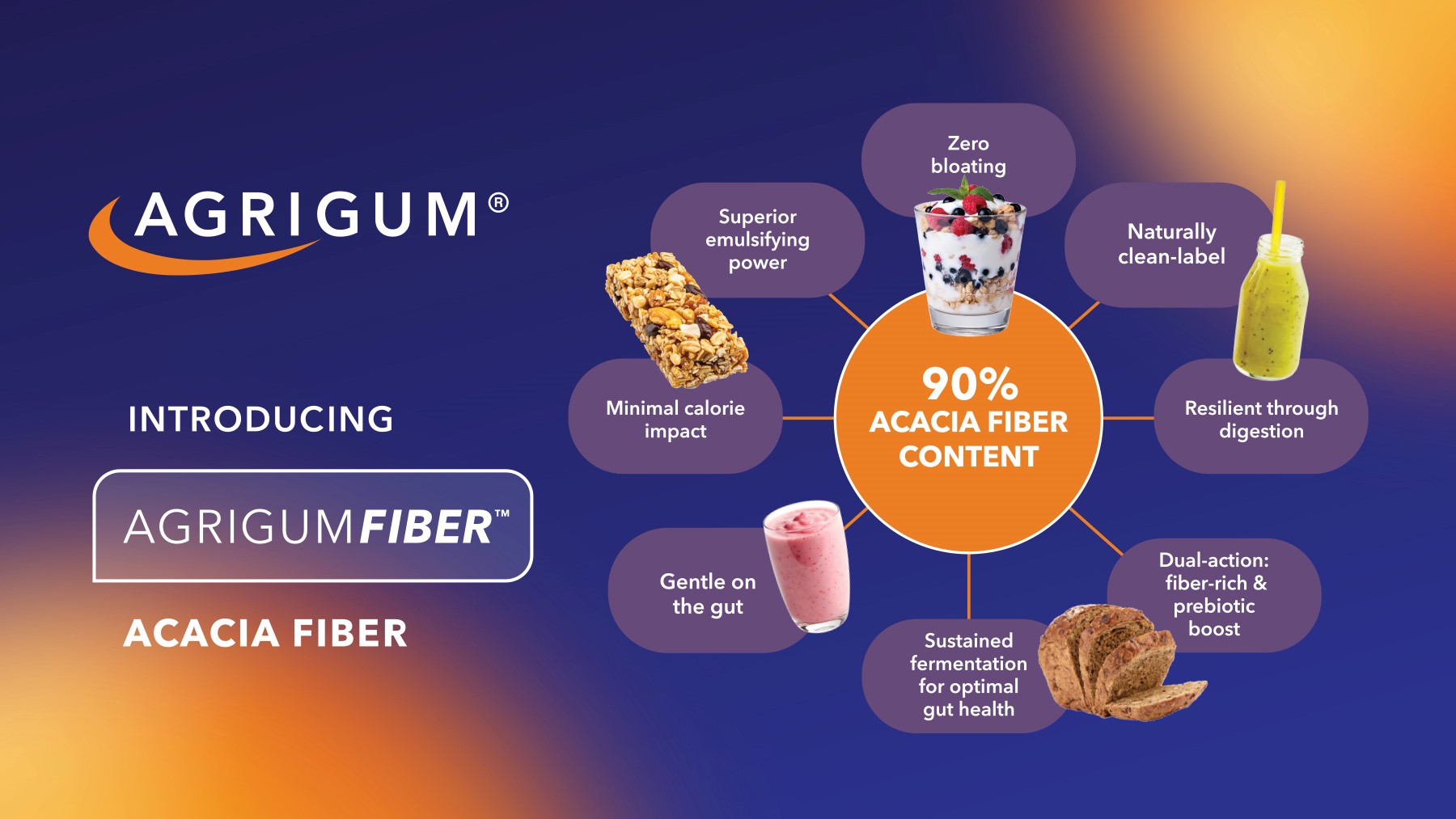
Agrigum Redefined FIBER
27 Oct 2025
Agrigum has transformed gum acacia into a natural, science-backed fibre that supports gut health, sustainability, and innovation across global food and nutrition applications.
Read more
Expanding boundaries in food & beverage innovation
23 Oct 2025
IMCD and FrieslandCampina Professional expand partnership to deliver Kievit® across EMEA, enabling brands to enhance quality and accelerate time-to-market for tomorrow’s food & beverage creations.
Read more
Amazon Grocery launch aims to balance quality with affordability
22 Oct 2025
Global e-commerce giant Amazon has introduced a new private-label food brand, combining existing Amazon Fresh and Happy Belly products with new everyday items.
Read more
Powerade enters hydration space with launch of Power Water
21 Oct 2025
Coca-Cola’s Powerade brand has launched a zero-sugar, electrolyte-enhanced functional water, marking the brand's entry into the hydration space.
Read more