
News
Fermentation-derived betalain food colours could replace 70% of natural and synthetic options
31 Mar 2022Phytolon’s precision fermentation-derived betalain colours “can replace 70% of the natural and synthetic” options once their full potential is exploited, the Israel-based start-up’s co-founder and CEO, Halim Jubran, told Ingredients Network.
The patented colour production technology uses fermentation with baker’s yeast to produce and release high titers of natural pigments of beet and cactus fruits.

The yeast strain is designed to release the purple and yellow pigments separately, said Jubran, enabling a full colour spectrum between purple and yellow, “including all purples, pinks, reds, oranges and yellows”.
It means vibrant colours can be produced without resorting to use of synthetic colours from non-natural sources.
Meanwhile, natural colours are “mostly farming-dependent plant extracts,” Jubran noted, whereas, according to Phytolon’s website, fermentation processes are cleaner, reducing carbon footprint by replacing agriculture.
“The sustainable value that our technology brings is embedded in the short fermentation cycled and high production yields,” said Jubran.
The website adds that, with increasing regulatory acceptance of “highly sustainable” technologies with better carbon footprints, “fermentation is designated to become the ingredient engine of the future”.
Phytolon is now preparing a life cycle assessment (LCA) to quantify the carbon footprint of its technology versus agriculture-based competing products, he added. “That is expected to demonstrate the positive impact on the environment that our technology brings.”
In terms of functionality, the precision-fermented colours have been demonstrated to be more stable to heat, light and pH compared to plant-extract natural colours, Jubran said, which is “attributed to the high purity and absence of plant impurities in our final product”.
Cost-wise, Phytolon’s colours are “currently positioned as cost-efficient [compared] to natural colours,” he said.
“Our plans consist of meeting the cost-efficiency of the synthetic colors in 2023,” he added. As part of this, Phytolon recently announced its partnered with Ginkgo Bioworks under which the pair will develop yeast strains with enhanced production yields which will help “pave the way to compete with synthetic colours in terms of cost and performance,” said Jubran.
Asked if Phytolon hopes precision-fermented colours could replace natural and synthetic options, Jubran replied: “Our fermented betalain colors are water soluble, and provide a wide color share (from yellow to purple), and were found to be compatible and competitive in multiple food categories.
“Therefore, they can replace 70% of the natural and synthetic colours, once [we] exploit the full potential.”
Food safety approval & 2023 launch
Nevertheless, the fermented colour offering is still some way off commercialisation; the company plans to launch first in the food and beverage market in 2023.
Jubran said Phytolon is now “almost ready” to submit petitions to the US Food and Drug Administration (FDA) and European Food Safety Authority (EFSA) after the completed proof of concept for safety and analytics.
He forecast a “clear regulatory path” in the US, through the Color Additive Petition pathway, and in the EU as a food additive.
“Our final product does not contain any yeast or DNA, and therefore qualifies for GMO-free classification,” Jubran added. “In Europe the yeast cells are considered processing aid, and therefore no GMO labelling applies.”
Natural or artificial: Is consumer education needed?
On its website, Phytolon says that its colour offering is a response to consumer demand for “healthy food and environmental sustainability”. The ever-increasing desire for naturally-sourced products, rather than synthetic ingredients, also continues to dominate in the list of demands from increasingly health-minded shoppers.
Given the resulting bright colours from Phytolon’s precision-fermentation process – a vibrancy consumers may normally associate with synthetic colours – Ingredients Network asked whether a level of consumer education over the process and its natural origins could be required.
Jubran’s response was that: “Dozens of fermentation-based ingredients were recently served to the food market by industry leaders. Fermentation is positioned as natural and state of the art approach for achieving healthy, efficient, and sustainable food systems.”
Related news

Oat Barista: Innovation for game-changing beverages
20 Nov 2025
Oat Barista is a clean label, sustainable, and innovative drink base specifically designed to create the perfect foam in one single ingredient.
Read more
Nitrites: Pressure grows on UK to follow EU’s lead
20 Nov 2025
Pressure is growing on the UK to follow the EU’s lead after the bloc revised its regulations on the permitted levels of nitrites and nitrates in cured meats.
Read more
Empowering innovation in fortification and colouration
13 Nov 2025
Divi’s Nutraceuticals offers a large portfolio of innovative, high-quality ingredients for foods, beverages, and supplements, with bespoke solutions and expert support for product success.
Read more
Danone highlights digestive health as potential ‘tipping point’ for food industry
13 Nov 2025
Danone is betting on a food industry “tipping point” that will bloat the market for healthy products, particularly those related to gut health.
Read more
Standing Ovation and Bel scale up casein production from dairy co-products
11 Nov 2025
Foodtech company Standing Ovation has partnered with cheese specialist Bel Group to manufacture dairy serums for industrial-scale casein production via precision fermentation.
Read more
AI attraction means foodtech startups must ‘prove’ rather than ‘promise’
4 Nov 2025
Reports suggest that artificial intelligence (AI) is sucking investment from foodtech and agritech, but investors say the picture is complicated.
Read more
Will postbiotics become the go-to functional ingredient?
3 Nov 2025
Postbiotics show significant promise for the functional foods market due to their safety profile and beneficial bioactive properties, research suggests.
Read more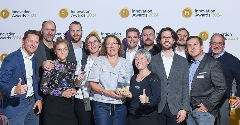
Meet the finalists of the Fi Europe Innovation Awards 2025
31 Oct 2025
Who made it to the shortlist of the Fi Europe Innovation Awards 2025? Read about the 23 companies making food and drink products healthier and manufacturing processes more efficient.
Read more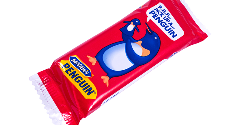
Penguin and Club bars no longer classed as chocolate
30 Oct 2025
Penguin and Club bars can no longer be classified as chocolate after the pladis-owned McVitie’s brands turned to cheaper alternatives amid the ongoing cocoa crisis.
Read more
Shorter drying time, sweeter success!
30 Oct 2025
Curious about cost-effective, sustainable and delicious candy making? Stefan Wessel reveals how Avebe’s solutions reduce drying time and energy use by up to 50%.
Read more