
News
EU to ban generic sustainability claims like ‘natural’ and ‘carbon neutral’
21 Sep 2023
The European Union will clamp down on greenwashing with provisional rules that will prohibit generic sustainability claims, such as “environmentally friendly”, “natural”, “biodegradable”, and those related to emissions offsetting schemes like “carbon neutral”.
This week (19 September), the EU Parliament and Council reached a provisional agreement on new rules to ban misleading advertisements and provide consumers with better product information.
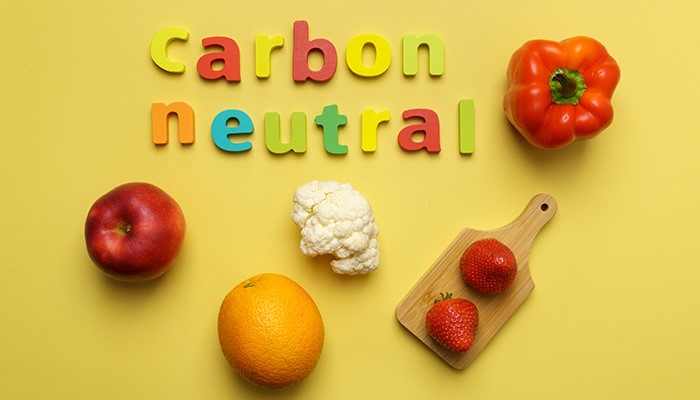
The agreement updates the existing EU list of banned commercial practices and adds to it several problematic marketing habits related to greenwashing and early obsolescence of goods.
Under the rules, generic environmental claims, such as “environmentally friendly”, “natural”, “biodegradable”, “climate neutral” and “eco” are banned unless the company can provide proof of recognised excellent environmental performance that is relevant to the claim.
Claims related to emissions offsetting schemes – for instance that a product has a neutral, reduced or positive impact on the environment – will also be banned.
Only sustainability labels based on approved certification schemes or established by public authorities will be allowed.
Bill rapporteur Biljana Borzan from the Progressive Alliance of Socialists and Democrats said this represented an excellent deal for consumers.
“[...] we are clearing the chaos of environmental claims, which will now have to be substantiated, and claims based on emissions offsetting will be banned,” she said.
The deal, still provisional, must now be ratified by the Parliament and Council, with the vote by members of Parliament expected to take place in November. After entering into force, EU member states will have two years to incorporate the rules into national law.
BEUC: ‘Carbon neutral claims are greenwashing, plain and simple’
The deputy director general of the Brussels-based European consumer rights organisation BEUC, Ursula Pachl, said the ban on carbon neutral claims was great news for consumers.
“Generic environmental claims are popping up everywhere, from food to textiles. Consumers end up lost in a jungle of green claims with no clue about which ones are trustworthy. Thankfully, the new rules are putting some order in the green claims’ chaos. Companies will have to explain why a product is environmentally friendly. This is crucial if we are to guide consumers to make more sustainable consumption choices,” she said.
A 2020 survey commissioned by the Carbon Trust found that two-thirds of the 10,000 consumers polled supported carbon labelling on products while 64% said they were more likely to think positively about a brand that could demonstrate it had lowered the carbon footprint of its products.
In 2021, hard discount retailer Lidl said it aimed to achieve carbon neutrality for one of its Cheddar cheese products by helping its supplier, Wyke Farms, reduce on-farm emissions. This would be done by implementing best practice in five key areas covering feed management, soil and land management, manure management, herd management and energy management, it said.
However, Pachl said: “Carbon neutral claims are greenwashing, plain and simple.”
“There is no such thing as ‘carbon neutral’ or ‘CO2 neutral’ cheese, plastic bottles, flights, or bank accounts. [...] It's a smoke screen giving the impression companies are taking serious action on their climate impact,” said the deputy director of the non-profit, which recently published a report on carbon-neutral claims on food, A climate-neutral food basket, too good to be true?
Pachl added: “The truth is that these claims are scientifically incorrect and should never be used. We are delighted to see that the EU has seized this legislative opportunity to ban carbon neutral claims.”
Lidl had admitted that in order to reach the goal of carbon neutrality, it would need to purchase carbon credits under an emission offsetting scheme.
Reacting to the EU provisional law, a spokesperson for the Carbon Trust said: "We welcome more regulation in this space and support changes being made in the EU and elsewhere to ensure that green claims are transparent and based on accurate methodologies that consumers can trust. At the beginning of September, we announced updates to our product carbon labelling services which follow rigorous standards, in line with international best practice, and we support changes in regulation to ensure all climate claims receive a similar level of scrutiny. We believe many businesses are ready to provide this, and consumers are increasingly expecting it.”
The new EU rules also cover non-food products, such as electronics. For instance, companies will no longer be able to encourage people to replace objects such as printer ink cartridges earlier than is strictly necessary and companies will not be allowed to market goods as repairable when they are not.
Related news

UK Government overhauls childhood obesity strategy
21 Nov 2025
The UK Government has announced a new package of measures designed to reverse the nation’s childhood obesity epidemic following the release of statistics revealing the scale of the crisis.
Read more
How younger consumers are redefining ingredient choices and rejecting brand loyalty
18 Nov 2025
Gen Z and millennial consumers’ preferences for transparency, functionality, and purpose are “redefining the very nature of consumption itself”, says SPINS.
Read more
New UPF standard hoped to offer consumers ‘coherence and clarity’
10 Nov 2025
Ingredients companies are being urged to enter “a new era of partnership and innovation” following the launch of the industry’s first non-UPF verification scheme.
Read more
Ingredient quantities mislabelled on popular protein bars, independent tests show
5 Nov 2025
Some popular protein bars contain more fat, carbs, and/or sugars than claimed on their labels, independent nutrition testing reveals.
Read more
Does promoting protein content push up plant-based sales?
27 Oct 2025
Promoting the protein content of meat-free products is a more effective sales strategy than adding carbon labels, a study of UK bakery chain Greggs suggests.
Read more
Supplement shoppers seek storytelling and science-backed suppliers
17 Oct 2025
Supplement consumers want specific health benefits that focus on prevention and personalisation, according to data from HealthFocus International.
Read more
Food fraud risks rise as brands fight economic and environmental headwinds
10 Oct 2025
Climate change, geopolitics, regulations, and demand for sustainable products are pushing up food fraud and adulteration risks, warns a world-leading food fraud expert.
Read more
The growing appeal of nutrient-dense food claims
2 Oct 2025
Nutrient-dense claims are rising as consumers reject the “empty calories” of UPFs in favour of products that provide meaningful nutrition with every calorie, Mintel data shows.
Read more
What does MAHA mean for the US nutraceutical industry?
30 Sep 2025
Industry associations have expressed mixed reactions to new policy directions on health and nutrition under the Make America Health Again (MAHA) banner.
Read more
Eco-Score labels improve consumer identification of sustainable foods
22 Sep 2025
The presence of a front-of-pack Eco-Score label improves consumers' accuracy in identifying sustainable food products from 52% to 72%, a study suggests.
Read more