
News
Cultivated seafood company roe-volutionising the caviar market
21 Feb 2025A Singapore-based startup is targeting premium markets and younger consumers with its latest innovation – cultivated caviar.
UMAMI Bioworks developed the caviar alternative using a blend of plant-based ingredients and cultured sturgeon cells – the species of wild fish whose roe is referred to as caviar.

The company says its cultivated caviar has the same “rich, buttery taste and velvety texture of its traditional counterpart”, while offering a nutrient profile rich in omega-3 fatty acids, antioxidants, and essential nutrients.
Gayathri Mani, product manager at UMAMI Bioworks, told Ingredients Network that the company is currently engaging with select partners, including high-end restaurants, chefs, and premium retailers, to co-create customised applications and refine the product for launch.
“While the exact timeline depends on regulatory processes in key regions, we aim to first roll out our cultivated caviar in markets where demand for sustainable luxury products is high,” she said.
Key regions will include North America, Europe, and parts of Asia.
“Caviar has long been associated with luxury and indulgence, and our cultivated caviar reflects that heritage,” Mani explained, adding that the company anticipates that its product will be priced on par with traditional caviar, as a way to honour its position as a premium experience.
Caviar on the brink of collapse
Caviar has been considered a delicacy for millennia. Records show that as far back as 1240 AD, caviar was an established part of Russian tradition. As of the 16th century, caviar began to be considered decadent and penetrated wider markets across Europe. Sturgeons – the only fish species whose roe is considered caviar – are highly sought after because of this.
However, this comes at a price – 90% of sturgeon species are endangered and on the brink of extinction due to overfishing, illegal caviar trade, and habitat loss.
Organisations such as the World Wildlife Fund (WWF) have initiatives to target the black market and illegal caviar trade, raising public awareness and advocating for stronger enforcement policies. WWF also has long-term initiatives including engaging with local fishing communities about sturgeon conservation.
While these initiatives have an impact, companies like UMAMI Bioworks are trying to tackle the problem from another avenue, offering consumers the same luxurious experience, while driving ethical sourcing and putting sustainability at the fore.
Sustainable luxury targeted at millennials and gen Z
According to Grand View Research, in 2023, the global caviar market generated a revenue of $417.4 million, and by 2030, it is expected to reach $709 million.
Thanks, in part, to the viral TikTok trend of “caviar bumps”, where people eat caviar off the back of their hand, the delicacy is gaining traction among everyday consumers, and is no longer segmented to the rich and famous. As of October 2024, the hashtag CaviarBumps had around 15 million views.
According to Mani, millennial and gen Z consumers are UMAMI Bioworks’ ideal. She explained that these demographics are redefining luxury with a focus on sustainability, ethics, and culinary experiences, alongside valuing transparency, innovation, and premium quality, making them a natural fit for cultivated caviar.
The future of cultivated food, according to UMAMI Bioworks
UMAMI Bioworks anticipates that as awareness of sustainability and ethical sourcing continues to grow, the cultivated caviar market will expand significantly, driven by consumers seeking luxury products that align with their values.
“Cultivated caviar has the potential to become a centrepiece of sustainable fine dining, offering an alternative to traditional caviar that supports marine conservation and biodiversity,” Mani said.
“UMAMI Bioworks aims to lead this evolution by setting new standards for quality, sustainability, and innovation in cultivated food. Through strategic partnerships and a focus on scalability, we are committed to making cultivated caviar a symbol of responsible luxury that inspires change across the food industry.”
UMAMI Bioworks making waves in the seafood industry
Singapore became the first country in the world to approve cultivated meat in 2020, ahead of the US and Israel.
Thanks to Singapore’s favourable regulatory environment, the country is ripe with cultivated innovations. While many companies are developing meat alternatives, UMAMI Bioworks – formerly known as UMAMI Meats until 2023 – has found its niche in the seafood market.
The startup was founded in 2020 by Mihir Pershad, whose aim was to leverage technology to enable consumers to eat the same seafood they eat today, for generations to come. Since its launch, UMAMI Bioworks has been working towards the commercialisation of various cultivated fish products.
In 2022, it partnered with Ingredion, a US-based ingredient firm to develop and launch cell-cultured fish fillets and crab cakes.
In 2023, the company formed three partnerships: a collaboration with Israeli-based Stakeholder Foods to develop cultivated fish and form them into filets using a 3D printer; a joint venture with the Japanese company Maruha Nichiro, aimed at building the infrastructure of Japan’s cultivated seafood industry, and scaling up UMAMI Bioworks’ process; and a partnership with Canada-based Cult Food Science to develop cultivated cat food. The latter product, Marina Cat, was expected to reach the market in 2024, but as of February 2025 is yet to be launched.
In 2024, UMAMI Bioworks partnered with US-based Friends & Family Pet Food Co to develop a range of cultivated pet foods, expected to launch in Q1 of 2025.
Related news

Bone broth: From old-fashioned to en vogue
24 Nov 2025
OXO’s entry into bone broth has turned the spotlight on this small but high-performance category – and there is still scope for growth, especially in the area of GLP-1 support.
Read more
UK Government overhauls childhood obesity strategy
21 Nov 2025
The UK Government has announced a new package of measures designed to reverse the nation’s childhood obesity epidemic following the release of statistics revealing the scale of the crisis.
Read more
Nitrites: Pressure grows on UK to follow EU’s lead
20 Nov 2025
Pressure is growing on the UK to follow the EU’s lead after the bloc revised its regulations on the permitted levels of nitrites and nitrates in cured meats.
Read more
Matcha madness: Why green is this year’s hottest colour
19 Nov 2025
Five years ago, it was a struggle to find matcha outside of Japan. Now it seems to be popping up everywhere, from coffee shops to supermarket shelves.
Read more
How younger consumers are redefining ingredient choices and rejecting brand loyalty
18 Nov 2025
Gen Z and millennial consumers’ preferences for transparency, functionality, and purpose are “redefining the very nature of consumption itself”, says SPINS.
Read more
Hybrid formats and flexible positioning to disrupt category norms in 2026
17 Nov 2025
Trend forecasters expect food and drink to move more fluidly across occasions, functions, and formats as consumers seek versatility, novelty, and convenience.
Read more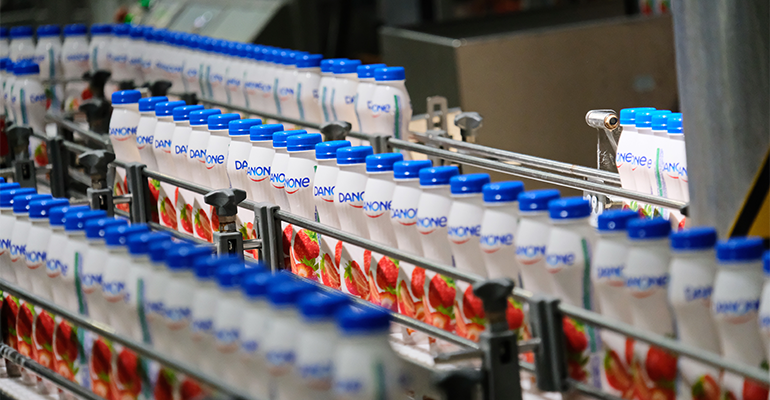
Danone highlights digestive health as potential ‘tipping point’ for food industry
13 Nov 2025
Danone is betting on a food industry “tipping point” that will bloat the market for healthy products, particularly those related to gut health.
Read more
Soy story: WWF scores UK supermarkets on sustainability efforts
12 Nov 2025
WWF has published its latest “Soy Scorecard”, ranking UK supermarkets’ efforts to combat deforestation and land conversion in their soy supply chains.
Read more
New UPF standard hoped to offer consumers ‘coherence and clarity’
10 Nov 2025
Ingredients companies are being urged to enter “a new era of partnership and innovation” following the launch of the industry’s first non-UPF verification scheme.
Read more
Cottage cheese makes a comeback as consumers call for cleaner labels
6 Nov 2025
From ice cream to dips and ready meals, cottage cheese is experiencing a renaissance as a high-protein, clean ingredient for health-conscious consumers.
Read more