
News
Cocoa-free chocolate company raises $6M for expansion
4 Nov 2021Germany’s QOA, a startup striving to create chocolate without the cocoa, closed a $6 million funding round led by Cherry Ventures with participation from 50years, World Fund, Nucleus Capital, Trellis Road, Pioneer Fund, and Tet Ventures.
Funding will be allocated toward building out a pilot production facility in Munich, Germany to complement QOA’s manufacturing facilities in Switzerland, the company said. Additionally, the company will allocate a portion of its funds toward hiring.
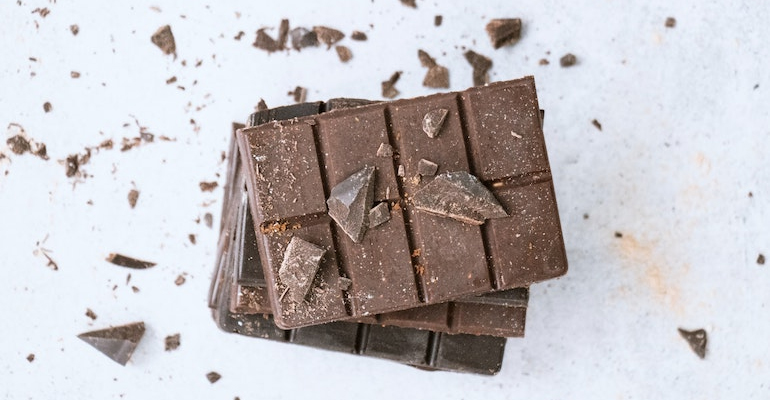
Chocolate has long been a product around which there have been questions of sustainability. From child labor and deforestation to concerns about climate change and loss of the ecosystems, concerns about chocolate production have been mounting, pushing major chocolate manufacturers to pledge to source their raw materials more sustainably. However, these promises that have spanned over a decade have gone largely unfulfilled, according to the Cocoa Barometer 2020 report.
To combat these ongoing issues, QOA is looking to tackle sustainability from an alternative perspective. Instead of plants in nature, the company relies on fermentation that produces natural byproducts from other food-making processes for its base material. The startup then uses its proprietary mixture of microbacteria and flavor formation to craft a chocolate alternative that maintains the texture and flavor of chocolate. According to the company, its chocolate is vegan and without any artificial additives.
QOA is scaling at a pace that it expects will bring its first cocoa-free chocolate products to market by 2022. By 2035, the German startup said that it intends to have reached a scale that will make it possible to price its products at or below the cost of traditional chocolate.
As demand for chocolate grows, prices have also increased. Chocolate – particularly dark chocolate -- has been linked to health benefits, but it is also a traditionally indulgent food. Both these qualities have been in-demand over the course of the pandemic, causing chocolate sales to grow 4.2%, according to the National Confectioners Association’s 2021 State of Treating report.
Not only has the market for chocolate grown, but more people are consuming larger quantities of the treat. In Cargill’s most recent ChocoLogic study, the company found about one-third of people increased their intake of chocolate as a result of the pandemic. This is despite years of rising prices. In 2018, the average chocolate and confectionery import price rose 3.5% compared to a year prior, according to Index Box. Then, this year, prices jumped again and major manufacturers like Hershey Co. announced that these price hikes would be passed down to consumers.
In such an environment, it is no surprise that entrepreneurs are looking for an alternative solution to continue to provide chocolate. In addition to QOA, California Cultured and Voyager Foods are working on creating chocolate without cocoa. If they succeed in matching the flavor profile of the beloved treat, there is a good chance that these alternatives will find their way into shoppers' baskets.
Related news

Soy story: WWF scores UK supermarkets on sustainability efforts
12 Nov 2025
WWF has published its latest “Soy Scorecard”, ranking UK supermarkets’ efforts to combat deforestation and land conversion in their soy supply chains.
Read more
Standing Ovation and Bel scale up casein production from dairy co-products
11 Nov 2025
Foodtech company Standing Ovation has partnered with cheese specialist Bel Group to manufacture dairy serums for industrial-scale casein production via precision fermentation.
Read more
New UPF standard hoped to offer consumers ‘coherence and clarity’
10 Nov 2025
Ingredients companies are being urged to enter “a new era of partnership and innovation” following the launch of the industry’s first non-UPF verification scheme.
Read more
Whistleblowers accuse UK meat industry of promoting cheap, unsustainable supply
7 Nov 2025
An anonymous group of industry insiders has accused the UK’s biggest food companies of systematically driving down meat quality and welfare standards.
Read more
Bord Bia presents Irish dairy ingredient suppliers at Fi Europe
6 Nov 2025
Dairygold Co-operative Society, The Carbery Group, and Ornua Co-operative: Meet with sustainable producers of Irish dairy ingredients at Food ingredients Europe 2025, Hall 7.2 Stand M18.
Read more
AI attraction means foodtech startups must ‘prove’ rather than ‘promise’
4 Nov 2025
Reports suggest that artificial intelligence (AI) is sucking investment from foodtech and agritech, but investors say the picture is complicated.
Read more
Penguin and Club bars no longer classed as chocolate
30 Oct 2025
Penguin and Club bars can no longer be classified as chocolate after the pladis-owned McVitie’s brands turned to cheaper alternatives amid the ongoing cocoa crisis.
Read more
Could plant-based protection replace plastic packaging?
29 Oct 2025
Swedish foodtech company Saveggy has launched an additive-free plant-based protection for cucumbers, offering a waste-free packaging solution for fruit and vegetables.
Read more
Does promoting protein content push up plant-based sales?
27 Oct 2025
Promoting the protein content of meat-free products is a more effective sales strategy than adding carbon labels, a study of UK bakery chain Greggs suggests.
Read more
Amazon Grocery launch aims to balance quality with affordability
22 Oct 2025
Global e-commerce giant Amazon has introduced a new private-label food brand, combining existing Amazon Fresh and Happy Belly products with new everyday items.
Read more