
News
Coca-Cola achieves carbon neutrality for Sweden and Spain
14 Sep 2021Coca-Cola announced that two of its sites – Jordbro in Sweden and Vilas del Turbón in Spain – are now carbon neutral. These two sites are the first to earn this designation as part of a pilot program that aims for at least six of Coca-Cola Europacific Partners (CCEP) sites to achieve carbon neutrality by the end of 2023.
For Coca-Cola, reducing emissions is a key priority as it works to improve its environmental footprint and hit its sustainability target of reducing emissions in its value chain by 30% by 2030. By 2040, the corporation aims to be net-zero.
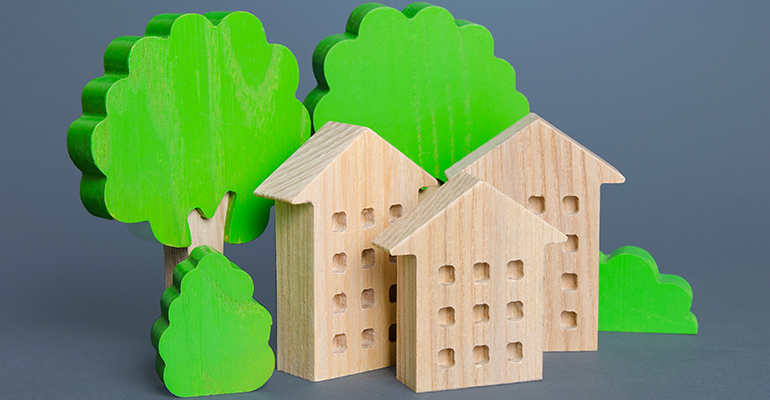
At these two sites that the company just certified as carbon neutral, both locations converted to 100% renewable electricity as well as implemented other reduction strategies that resulted in a carbon decrease of 68% per liter of product produced in Sweden and 36% per liter of product produced in Spain. To offset the remaining emissions, Coca-Cola is investing in verified carbon offset projects, such as a reforestation project in Orinoco, Colombia, that works to sequester carbon through reforestation and restoration of the ecosystem.
In a press release, the company said it intends to continue to work on on-site emissions reductions over the next three years.
Coca-Cola has been working for several years on sustainability initiatives, including converting its packaging to be 100% recyclable by 2025 and manufacturing with an average of 50% recycled material by 2030.
Consumers are increasingly concerned not only with what is inside a package but also with how the package itself is made, including the energy that went into its production. With an increasing demand for sustainable alternatives as well as transparent supply chains that are conscientious of energy use, Coke has felt the pressure to adjust its manufacturing operations. Coca-Cola has faced intense criticism as it was found to be the most polluting brand in both 2018 and 2019 by a global audit of plastic waste from Break Free from Plastic.
Although the company is making moves to respond to consumers looking for more environmentally-friendly alternatives, it did publicly say in 2020 that it will not get rid of plastic bottles because consumers appreciate the fact that they are lightweight and resealable.
With sustainability continually at the forefront for consumers and manufacturers, it is unsurprising that Coca-Cola plans to continue pushing for carbon neutrality across its sites that produce thousands of tons of carbon dioxide annually.
Related news
Soy story: WWF scores UK supermarkets on sustainability efforts
12 Nov 2025
WWF has published its latest “Soy Scorecard”, ranking UK supermarkets’ efforts to combat deforestation and land conversion in their soy supply chains.
Read more
Standing Ovation and Bel scale up casein production from dairy co-products
11 Nov 2025
Foodtech company Standing Ovation has partnered with cheese specialist Bel Group to manufacture dairy serums for industrial-scale casein production via precision fermentation.
Read more
New UPF standard hoped to offer consumers ‘coherence and clarity’
10 Nov 2025
Ingredients companies are being urged to enter “a new era of partnership and innovation” following the launch of the industry’s first non-UPF verification scheme.
Read more
Whistleblowers accuse UK meat industry of promoting cheap, unsustainable supply
7 Nov 2025
An anonymous group of industry insiders has accused the UK’s biggest food companies of systematically driving down meat quality and welfare standards.
Read more
Bord Bia presents Irish dairy ingredient suppliers at Fi Europe
6 Nov 2025
Dairygold Co-operative Society, The Carbery Group, and Ornua Co-operative: Meet with sustainable producers of Irish dairy ingredients at Food ingredients Europe 2025, Hall 7.2 Stand M18.
Read more
AI attraction means foodtech startups must ‘prove’ rather than ‘promise’
4 Nov 2025
Reports suggest that artificial intelligence (AI) is sucking investment from foodtech and agritech, but investors say the picture is complicated.
Read more
Penguin and Club bars no longer classed as chocolate
30 Oct 2025
Penguin and Club bars can no longer be classified as chocolate after the pladis-owned McVitie’s brands turned to cheaper alternatives amid the ongoing cocoa crisis.
Read more
Could plant-based protection replace plastic packaging?
29 Oct 2025
Swedish foodtech company Saveggy has launched an additive-free plant-based protection for cucumbers, offering a waste-free packaging solution for fruit and vegetables.
Read more
Does promoting protein content push up plant-based sales?
27 Oct 2025
Promoting the protein content of meat-free products is a more effective sales strategy than adding carbon labels, a study of UK bakery chain Greggs suggests.
Read more
Amazon Grocery launch aims to balance quality with affordability
22 Oct 2025
Global e-commerce giant Amazon has introduced a new private-label food brand, combining existing Amazon Fresh and Happy Belly products with new everyday items.
Read more