
News
Cambridge University invents vegan spider silk to replace single-use plastics
19 Jul 2021Xampla, a spinoff from Cambridge University, is working on commercializing a biodegradable alternative to single-use plastics that is made out of plant products but where the molecular structure is manipulated to resemble spider silk.
The polymer film is comprised of crystalline and amorphous chains that have been genetically engineered to replicate the protein chains that are present in a spider’s web, which is one of the earth's strongest natural materials.
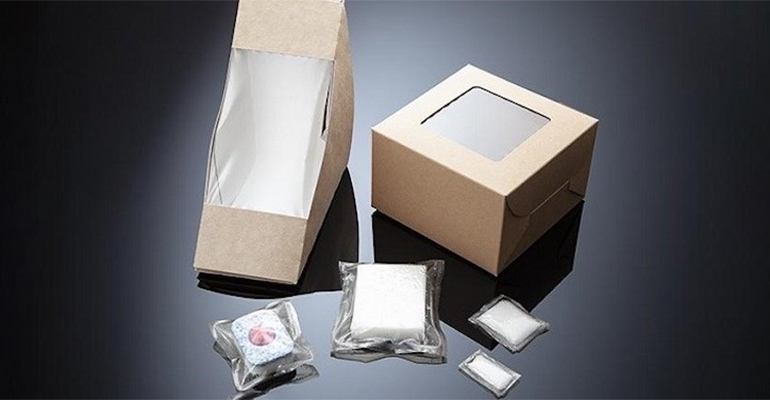
Currently Xampla is working with commercially available soy and pea protein to create these protein chains that will become a flexible, bio-degradable film, but Food Navigator reported that the firm’s technology can be used on a wide variety of plant proteins.
What makes Xampla’s research intriguing is the startup’s pursuit of creating a transparent plant-based film. Currently, there are many plant-based, bio-degradable packaging options available on the market, but due to the non-soluable molecular makeup of proteins, it is difficult to chain these proteins together to create a see-through material that is reminiscent of plastic.
However, Xampla has discovered a method to accomplish this feat. Using a vinegar-based mild solvent, scientists have been able to unfold plant proteins and render them sufficiently malleable to rearrange them at a molecular level. Doing so has allowed Xampla to create chains that resemble spider silk that can then be woven together into a transparent film that performs like plastic.
The startup noted that it is still perfecting the color and texture of the plant-based film. Additionally, when the bio-based alternative initially becomes available, Xampla said it will be more expensive than petroleum-derived plastics. However, Xampla noted that as the demand scales and production increases, price parity with traditional plastic is a distinct possibility.
While the technology has not yet progressed to the point where it is commercially available, the startup anticipates that it will launch its first products in 2022. In addition to bio-based transparent sachets, Xampla is looking at water-soluble solutions that will dissipate should the packaging comes into contact with water. A water-soluble solution has the advantage of helping to avert a further increase in the number of plastics, including microplastics, that find their way into the ocean and do not biodegrade.
Xampla is working on this plastic alternative at a time when the European Union is rolling out the Directive on Single-Use Plastics which outlawed plastic products such as straws and utensils beginning on July 3, when there are sustainable and affordable alternatives easily available.
Related news
Oat Barista: Innovation for game-changing beverages
20 Nov 2025
Oat Barista is a clean label, sustainable, and innovative drink base specifically designed to create the perfect foam in one single ingredient.
Read more
Nitrites: Pressure grows on UK to follow EU’s lead
20 Nov 2025
Pressure is growing on the UK to follow the EU’s lead after the bloc revised its regulations on the permitted levels of nitrites and nitrates in cured meats.
Read more
Empowering innovation in fortification and colouration
13 Nov 2025
Divi’s Nutraceuticals offers a large portfolio of innovative, high-quality ingredients for foods, beverages, and supplements, with bespoke solutions and expert support for product success.
Read more
Danone highlights digestive health as potential ‘tipping point’ for food industry
13 Nov 2025
Danone is betting on a food industry “tipping point” that will bloat the market for healthy products, particularly those related to gut health.
Read more
Standing Ovation and Bel scale up casein production from dairy co-products
11 Nov 2025
Foodtech company Standing Ovation has partnered with cheese specialist Bel Group to manufacture dairy serums for industrial-scale casein production via precision fermentation.
Read more
AI attraction means foodtech startups must ‘prove’ rather than ‘promise’
4 Nov 2025
Reports suggest that artificial intelligence (AI) is sucking investment from foodtech and agritech, but investors say the picture is complicated.
Read more
Will postbiotics become the go-to functional ingredient?
3 Nov 2025
Postbiotics show significant promise for the functional foods market due to their safety profile and beneficial bioactive properties, research suggests.
Read more
Meet the finalists of the Fi Europe Innovation Awards 2025
31 Oct 2025
Who made it to the shortlist of the Fi Europe Innovation Awards 2025? Read about the 23 companies making food and drink products healthier and manufacturing processes more efficient.
Read more
Penguin and Club bars no longer classed as chocolate
30 Oct 2025
Penguin and Club bars can no longer be classified as chocolate after the pladis-owned McVitie’s brands turned to cheaper alternatives amid the ongoing cocoa crisis.
Read more
Shorter drying time, sweeter success!
30 Oct 2025
Curious about cost-effective, sustainable and delicious candy making? Stefan Wessel reveals how Avebe’s solutions reduce drying time and energy use by up to 50%.
Read more