Buckwheat
Product description
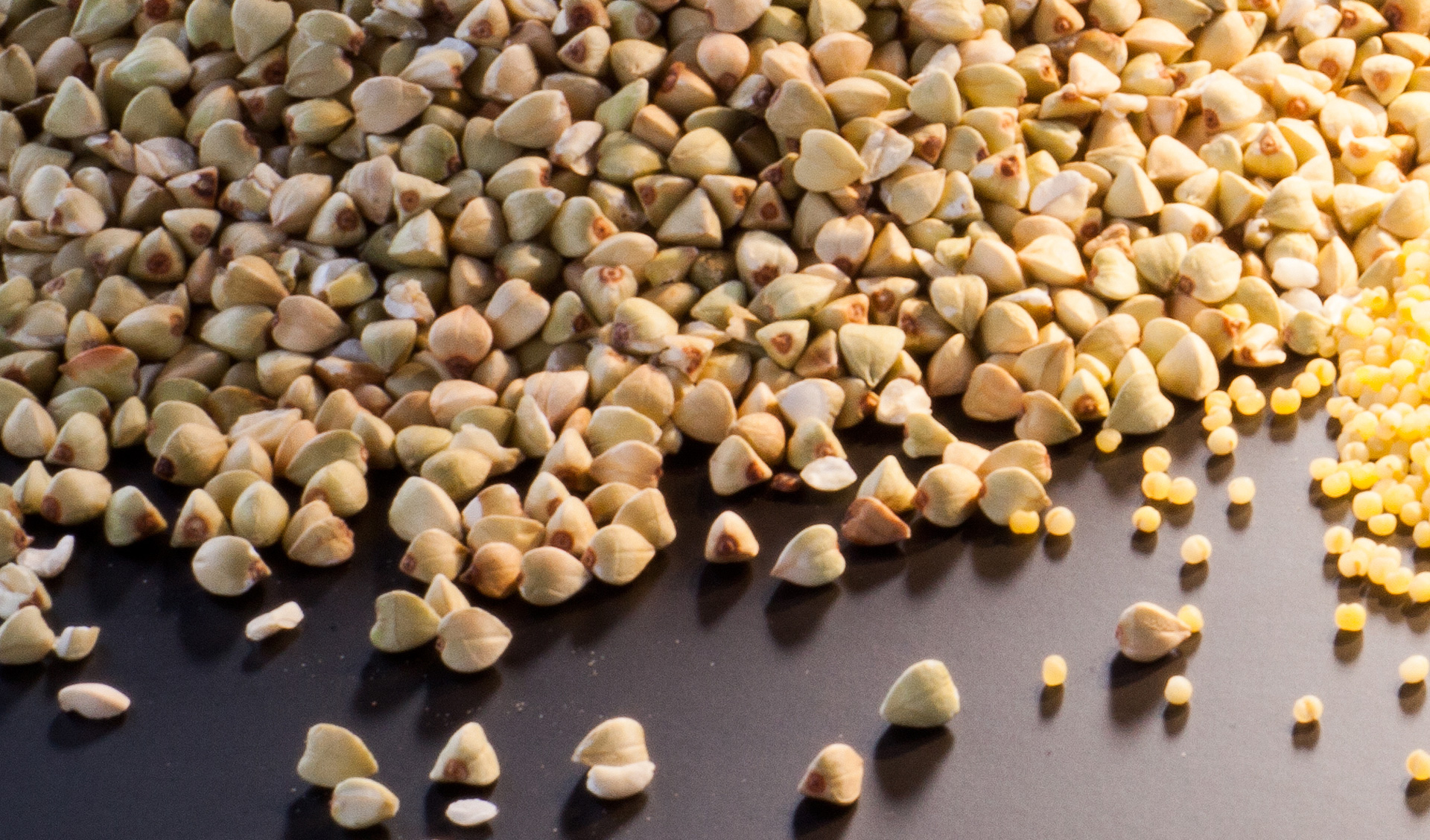
The name buckwheat hints at the beechnut-like shape and its
wheat-like properties. Botanically a knotweed, buckwheat has been grown
since earliest times in Middle Asia and Siberia. Today´s main growing
areas are China and Eastern Europe, but buckwheat has also become
popular in German organic agriculture. Growing buckwheat has a positive
effect on the environment. The plantation attracts and supports
otherwise endangered bees, therefore it contributes to the conservation
of biodiversity.
Buckwheat is a source of the essential amino acid lysine, which is normally sourced from animal protein – an important point for vegetarians and vegans.
Buckwheat is used like other grains and cereal products, its lack of gluten makes it an important ingredient in glutenfree and allergene free diets.
Read more
Buckwheat is a source of the essential amino acid lysine, which is normally sourced from animal protein – an important point for vegetarians and vegans.
Buckwheat is used like other grains and cereal products, its lack of gluten makes it an important ingredient in glutenfree and allergene free diets.
Specifications
| Sales markets | Western Europe; Eastern Europe |
|---|---|
| Supplied from | China; Lithuania; Poland |
| Certifications | Allergen-free; Gluten-free; Organic |
More products from ZIEGLER ORGANIC
Products from other suppliers
❮
❯
-
Sea Cucumber & Oyster Tablet
-
Bifidobacterium longum BORI
-

Pep2Dia®, new bioactive ingredient that regulates blood sugar levels after meals.
-
CRISPYTEC Series
-

GLP-1 Probiotics - Akkermansia muciniphila AH39 & Lactobacillus casei CCFM419
-

BiPRO® 9500 whey protein isolate (WPI)
-
Crispact® Stick packs
-

Nextida® GC
-
Gasbet tablets
-
NEUROMAX®
Buckwheat