
News
Broadening Our Taste Buds, One Ingredient at a Time
5 Nov 2013Our taste buds are programmed to favour and reject certain tastes almost instinctively. Sweet tastes are well-accepted, as traditionally they indicate a natural and safe source of energy – whereas bitter tastes tend to warn against toxic foods, and sour tastes can act as a warning for spoiled food. However, consumers’ palates are becoming more accepting […]

Our taste buds are programmed to favour and reject certain tastes almost instinctively. Sweet tastes are well-accepted, as traditionally they indicate a natural and safe source of energy – whereas bitter tastes tend to warn against toxic foods, and sour tastes can act as a warning for spoiled food. However, consumers’ palates are becoming more accepting of a range of flavours, including both bitter and sour tastes. One of the motivating factors bringing about this change can be put down to the dispersion of ethnic cuisine, with foods and flavours spreading across the globe. As a result, consumers have become more willing to experiment with new cuisines: over two-fifths of UK consumers look out for new and interesting ethnic foods when selecting ethnic products, while the bulk – 84% – of US consumers are open to trying new flavours when ordering at a restaurant. This has spurred the popularity of spicy and hot flavours and ingredients, with more consumers claiming to enjoy spicier and hotter flavours. In fact, over half of US consumers say that spicy food has more appeal now compared to when they were younger and a third of UK adults claim they are eating more spicy food now than they were a few years ago.
Sourness is the sensation evoked by acidic substances and is one of the strongest taste sensations, alongside bitterness, which is a strong, sharp, un-sweet taste found in substances having a basic pH. Straight off the back of hot and spicy flavours, tart or sour flavours and ingredients are progressively popping up as a flavour component or ingredient in food and drink products. A prime example of this is Greek yoghurt, a sour, tart tasting food which has risen sharply in popularity over the past few years. The growth of Greek yoghurt is evidenced by almost half of all new product launches over the past five years occurring in 2012. The sudden popularity of Greek yoghurt is primarily down to its taste, cited by almost three-fifths of US consumers as a driver for purchasing Greek yoghurt. People enjoy its tangy, sour taste, along with its creamy texture. The use of sour, tart fruits including lemons, pomegranates, cranberries, wolfberries, goji berries, and red dates is also becoming increasingly popular in food and drinks. This is partially due to their purported health benefits, but also their tartness adds a ‘punchy’ kick of flavour, creating appealing flavour combinations. The spread and influence of Eastern cuisine plays a large role in the increasing popularity of some key ‘tart’ ingredients, from exotic fruits to pickled vegetables and kombucha, a tart fermented tea.
The use of sour or tart ingredients across a range of products will also appeal to consumers concerned with their sugar intake. Almost a quarter of US consumers say they are using less sugar than they did a year ago, while a quarter of UK consumers find cereal bars, for example, too high in sugar. The healthier image of sour ingredients and flavours is partly linked to what they aren’t, and the fact they are the opposite of sweet. Bigger, bolder flavours will not only help satisfy consumers’ more adventurous tastes but will also help create more interesting savoury flavour combinations appealing to consumers trying to limit their sugar intake.
Related news

Oat Barista: Innovation for game-changing beverages
20 Nov 2025
Oat Barista is a clean label, sustainable, and innovative drink base specifically designed to create the perfect foam in one single ingredient.
Read more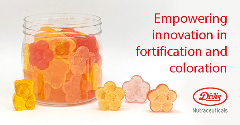
Empowering innovation in fortification and colouration
13 Nov 2025
Divi’s Nutraceuticals offers a large portfolio of innovative, high-quality ingredients for foods, beverages, and supplements, with bespoke solutions and expert support for product success.
Read more
From fruit to functional solutions: Meet Paradise Fruits at Fi Europe in Paris
13 Nov 2025
Paradise Fruits Solutions and Paradise Fruits Health will showcase their combined expertise in delivering innovative, fruit-based solutions to the food and beverage industry at the upcoming Fi Europe trade show (2-4 December 2025, Paris).
Read more
New UPF standard hoped to offer consumers ‘coherence and clarity’
10 Nov 2025
Ingredients companies are being urged to enter “a new era of partnership and innovation” following the launch of the industry’s first non-UPF verification scheme.
Read more
Cottage cheese makes a comeback as consumers call for cleaner labels
6 Nov 2025
From ice cream to dips and ready meals, cottage cheese is experiencing a renaissance as a high-protein, clean ingredient for health-conscious consumers.
Read more
Bord Bia presents Irish dairy ingredient suppliers at Fi Europe
6 Nov 2025
Dairygold Co-operative Society, The Carbery Group, and Ornua Co-operative: Meet with sustainable producers of Irish dairy ingredients at Food ingredients Europe 2025, Hall 7.2 Stand M18.
Read more
Shorter drying time, sweeter success!
30 Oct 2025
Curious about cost-effective, sustainable and delicious candy making? Stefan Wessel reveals how Avebe’s solutions reduce drying time and energy use by up to 50%.
Read more
Could plant-based protection replace plastic packaging?
29 Oct 2025
Swedish foodtech company Saveggy has launched an additive-free plant-based protection for cucumbers, offering a waste-free packaging solution for fruit and vegetables.
Read more
Will Wicks’ Killer Bar harm the protein bar category?
23 Oct 2025
Joe Wicks’ deliberately dangerous protein bar is fuelling anti-UPF sentiment – but there are concerns that his messaging is misguided and could have unintended consequences.
Read more
Expanding boundaries in food & beverage innovation
23 Oct 2025
IMCD and FrieslandCampina Professional expand partnership to deliver Kievit® across EMEA, enabling brands to enhance quality and accelerate time-to-market for tomorrow’s food & beverage creations.
Read more