
News
Brazil sets official definition of ‘whole grain’
10 May 2021Products must contain at least 30% whole grain ingredients to use a whole grain claim in Brazil, under new rules.
According to the legislation, which enters into force on into force on 22 April 2022, cereal-based foods are considered whole grain when the finished product contains at least 30% whole grain ingredients and the quantity of whole ingredients is greater than the quantity of refined ingredients.
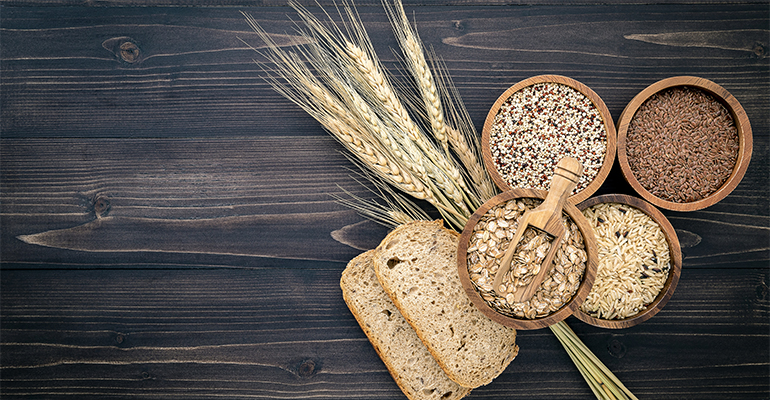
Prior to this, there was no legal definition for the use of the term whole grain in Brazil, meaning any food could use the term on product labels, making informed purchasing decisions more difficult for consumers.
The full resolution can be read here (in Portuguese).
Brazil’s food safety regulatory authority, ANVISA, worked with the food industry to draw up the definition with input from civil society groups and a public consultation process.
Manufacturers are permitted to mix refined flour, bran and germ and make a whole grain claim as long as these ingredients are used in quantities that reflect the typical proportion within the intact caryopsis. However, the ingredient list must declare this as ‘whole reconstituted flour’, followed by the common name of the plant species used.
Cereals covered by the resolution include wheat, amaranth, rice, oats, rye, barley, fonio, millet, corn, quinoa, sorghum, teff, and buckwheat. These grains can be processed, such as milled or flaked, as long as the starchy endosperm, bran and germ are present in the same proportion as in the whole caryopsis, the text reads.
Cereal-based foods that do not comply with the whole grain definition cannot use words, symbols, illustrations or any other graphic representations that suggest a whole grain content.
The expert’s view: ‘An important regulatory precedent’
Francisco Jiménez, regulatory affairs adviser at InfoAlimentario, said: “With this new regulation for whole grain cereal-based foods, Brazil set an important regulatory precedent in Latin America, since no country in the region has such requirements like the minimum 30%.”
Jiménez described the regulation, which has been on the cards since 2017, represented a balance between consumer rights, cereal-based product innovation, and marketing practices.
“In my opinion, this minimum amount of whole grain represents the reality of the industrial practices not only in Brazil, but in the global cereal industry, coming along with the innovation processes in such industry,” Jiménez told The Ingredient Network.
“Companies whose products do not meet the criteria to be classified as whole grain, but contain whole grain ingredients have two options: reformulation or to adapt their labels to comply with the new provisions if there is an interest in making something like a whole grain claim.”
Misleading claims
A survey carried out in 2016 by Brazilian consumer rights watchdog IDEC found that, five out of 14 cookies making a whole grain claim did not even contain flour or whole grain flour in their formulation. A further six had more refined flour than whole grain flour while three did not contain flour as a main ingredient.
Ana Paula Bortoletto, IDEC nutritionist and research coordinator, said at the time: "As there is no specific legislation, the industry has carte blanche to claim that ultra-processed products are whole grain even when they do not have any type of whole grain, as observed in five evaluated cookies.”
In the US, 100% of the grain kernel’s original bran, germ, and endosperm must be present in their original proportions for an ingredient to count as whole grain.
In Europe, according to the HealthGrain definition, manufacturers may remove up to 2% of the grain’s outer bran layer, which contains the fewest nutrients and can also carry traces of pesticides and mycotoxins.
Related news

UK Government overhauls childhood obesity strategy
21 Nov 2025
The UK Government has announced a new package of measures designed to reverse the nation’s childhood obesity epidemic following the release of statistics revealing the scale of the crisis.
Read more
How younger consumers are redefining ingredient choices and rejecting brand loyalty
18 Nov 2025
Gen Z and millennial consumers’ preferences for transparency, functionality, and purpose are “redefining the very nature of consumption itself”, says SPINS.
Read more
New UPF standard hoped to offer consumers ‘coherence and clarity’
10 Nov 2025
Ingredients companies are being urged to enter “a new era of partnership and innovation” following the launch of the industry’s first non-UPF verification scheme.
Read more
Ingredient quantities mislabelled on popular protein bars, independent tests show
5 Nov 2025
Some popular protein bars contain more fat, carbs, and/or sugars than claimed on their labels, independent nutrition testing reveals.
Read more
Does promoting protein content push up plant-based sales?
27 Oct 2025
Promoting the protein content of meat-free products is a more effective sales strategy than adding carbon labels, a study of UK bakery chain Greggs suggests.
Read more
Supplement shoppers seek storytelling and science-backed suppliers
17 Oct 2025
Supplement consumers want specific health benefits that focus on prevention and personalisation, according to data from HealthFocus International.
Read more
Food fraud risks rise as brands fight economic and environmental headwinds
10 Oct 2025
Climate change, geopolitics, regulations, and demand for sustainable products are pushing up food fraud and adulteration risks, warns a world-leading food fraud expert.
Read more
The growing appeal of nutrient-dense food claims
2 Oct 2025
Nutrient-dense claims are rising as consumers reject the “empty calories” of UPFs in favour of products that provide meaningful nutrition with every calorie, Mintel data shows.
Read more
What does MAHA mean for the US nutraceutical industry?
30 Sep 2025
Industry associations have expressed mixed reactions to new policy directions on health and nutrition under the Make America Health Again (MAHA) banner.
Read more
Eco-Score labels improve consumer identification of sustainable foods
22 Sep 2025
The presence of a front-of-pack Eco-Score label improves consumers' accuracy in identifying sustainable food products from 52% to 72%, a study suggests.
Read more