
News
Brands and retailers find ways to reduce food waste
12 Oct 2022
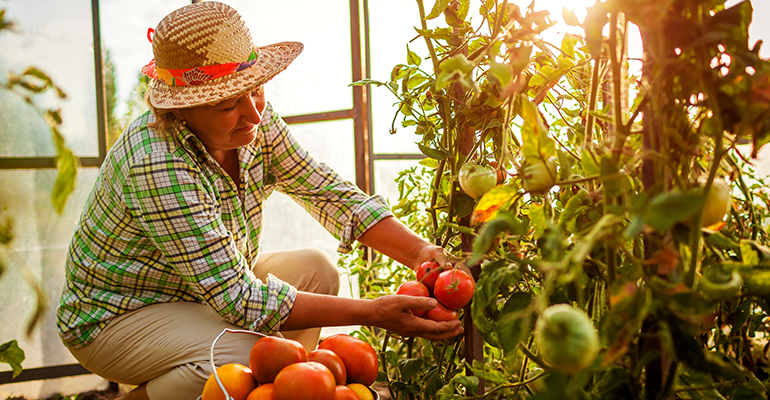
From supermarkets selling imperfect ‘wonky’ vegetables to drinks brands using upcycled barley for plant-based milks, retailers and manufacturers alike are finding ways to reduce food waste across the value chain.
Despite efforts by grocery retailers and manufacturers, food waste continues to blight the food industry with over 88 million tonnes of food thrown away annually in Europe.
A societal, environmental, and business priority
An article by global management consulting firm McKinsey & Company has shed more light on this topic, making the case that tackling food loss is a “societal, environmental, and business priority.”
Reducing food loss is immensely achievable, its authors state encouragingly, suggesting that united efforts amongst all participants in the value chain could cut food loss by 50 to 70%.
Two-thirds of the food that would otherwise be lost could be redirected to human consumption; the remaining one-third would go to alternative uses, such as bio-based materials or animal feed, they add.
Some efforts are already being made to add value to such produce. Online companies such as Imperfect Foods and Misfits Market sell imperfect produce that cannot be sold to grocery stores while traditional brick-and-mortar supermarkets Lidl and Morrisons have rolled out “wonky vegetable” campaigns in their supermarkets in the UK, selling imperfect produce.
In 2021, AB InBev's Anheuser-Busch revealed it would invest $100 million to expand Evergrain, its subsidiary’s production capabilities to recycle waste barley and repurpose it for use in food and beverages.
Shifting food loss thinking
“Taking food loss and turning it into value could be beneficial, which is what AB InBev is doing by supporting their product creation of taking barley by products and turning them into a protein and fibre ingredient,” said Turner Wyatt, CEO at Upcycled Food Association, in a recent post.
“Food loss is not due to one person’s choices and it’s certainly not one person’s responsibility to solve, but that we must all come together and shift the way we think about food loss, food waste, and the opportunities to address them.”
So, what can grocery retailers and manufacturers do to reduce food loss? Well, firstly it involves a shift in mindset to think of food loss as an operational inefficiency that affects the business as a whole.
This mindset could then evolve beyond satisfying sustainability targets and towards opportunities that benefit the business supply chain by improving both the top and bottom lines.
To put that into practice is the next step, with companies requiring a new communicative approach with stakeholders in the food ecosystem and consigning business-as-usual practices as those of yesteryear.
Enormous potential to add value to sidestreams
According to the authors of McKinsey’s report, AB InBev’s investment is a great example of turning food loss into value.
By turning its barley by-products into a protein and fibre ingredient, a dairy-free protein drink and a protein ingredient was produced and made commercially available by the drinks firm.
“There is enormous potential to sell more of the food that farmers produce,” says the report. “Food that would otherwise be lost can be turned into new products and thriving businesses. Consider dedicating R&D resources to developing new revenue streams from nonmarketable food.”
Related news

Soy story: WWF scores UK supermarkets on sustainability efforts
12 Nov 2025
WWF has published its latest “Soy Scorecard”, ranking UK supermarkets’ efforts to combat deforestation and land conversion in their soy supply chains.
Read more
Standing Ovation and Bel scale up casein production from dairy co-products
11 Nov 2025
Foodtech company Standing Ovation has partnered with cheese specialist Bel Group to manufacture dairy serums for industrial-scale casein production via precision fermentation.
Read more
New UPF standard hoped to offer consumers ‘coherence and clarity’
10 Nov 2025
Ingredients companies are being urged to enter “a new era of partnership and innovation” following the launch of the industry’s first non-UPF verification scheme.
Read more
Whistleblowers accuse UK meat industry of promoting cheap, unsustainable supply
7 Nov 2025
An anonymous group of industry insiders has accused the UK’s biggest food companies of systematically driving down meat quality and welfare standards.
Read more
Bord Bia presents Irish dairy ingredient suppliers at Fi Europe
6 Nov 2025
Dairygold Co-operative Society, The Carbery Group, and Ornua Co-operative: Meet with sustainable producers of Irish dairy ingredients at Food ingredients Europe 2025, Hall 7.2 Stand M18.
Read more
AI attraction means foodtech startups must ‘prove’ rather than ‘promise’
4 Nov 2025
Reports suggest that artificial intelligence (AI) is sucking investment from foodtech and agritech, but investors say the picture is complicated.
Read more
Penguin and Club bars no longer classed as chocolate
30 Oct 2025
Penguin and Club bars can no longer be classified as chocolate after the pladis-owned McVitie’s brands turned to cheaper alternatives amid the ongoing cocoa crisis.
Read more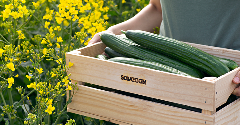
Could plant-based protection replace plastic packaging?
29 Oct 2025
Swedish foodtech company Saveggy has launched an additive-free plant-based protection for cucumbers, offering a waste-free packaging solution for fruit and vegetables.
Read more
Does promoting protein content push up plant-based sales?
27 Oct 2025
Promoting the protein content of meat-free products is a more effective sales strategy than adding carbon labels, a study of UK bakery chain Greggs suggests.
Read more
Amazon Grocery launch aims to balance quality with affordability
22 Oct 2025
Global e-commerce giant Amazon has introduced a new private-label food brand, combining existing Amazon Fresh and Happy Belly products with new everyday items.
Read more