
News
Bacteria can be used to convert plastic waste into vanilla flavouring
5 Jul 2022
A lab engineered strain of E.coli that can sustainably convert used plastic waste into vanillin – the key ingredient in vanilla flavouring – has been discovered at the University of Edinburgh.
The findings, published recently in the journal Green Chemistry, have “major implications for the field of plastic sustainability,” first author and Biotechnology and Biological Sciences Research Council (BBSRC) Discovery fellow, Joanna Sadler, said in an accompanying press statement.
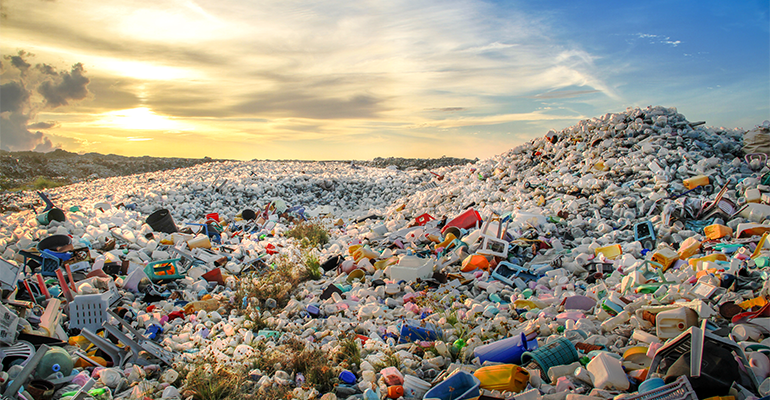
It is the first example of biological upcycling of waste polyethylene terephthalate (PET) plastic into a single “value-added” small molecule.
Vanillin is the primary component of extracted vanilla beans which provides the taste and smell of vanilla in flavourings. Beside food, it is widely used in cosmetics, pharmaceuticals, cleaning products and herbicides.
Global demand for vanillin exceeded 37,000 tonnes in 2018 and is expected to top 59,000 tonnes by 2025, with revenues of $734 million, said the researchers, citing Grand View Research figures.
Developing tech to valorise post-consumer PET waste
The discovery could provide a “tasty solution” to the world’s mounting plastic crisis, as scientists race to develop new and improved recycling processes for the masses of PET used globally, including in food and drinks packaging, according to the press statement.
The plastic is produced from non-renewable materials such as oil and gas, with around 50 million tonnes of PET waste produced annually, leading to plastic pollution and serious environmental impact.
“There is an urgent need to develop technologies to valorise post-consumer PET waste to tackle plastic pollution and move towards a circular economy,” the researchers stressed. “Whilst PET degradation and recycling technologies have been reported, examples focus on repurposing the resultant monomers to produce more PET or other second-generation materials.”
Economic incentives are also associated with the discovery since plastics lose 95% of their material value after a single use, the researchers said, “leading to an estimated $110 billion loss to the global economy per annum”.
E.coli conversion to vanillin process
Enzymes have already been developed to breakdown PET polymer into terephthalic acid (TA).
Engineering a novel biosynthetic pathway in the laboratory bacterium E.coli, the researchers developed a process to convert TA directly from “post-consumer plastic waste” into vanillin in a “one-pot process”.
After process optimisation, they were able to achieve 79% TA to vanillin conversion.
This conversion rate was a 157-fold improvement over pre-optimisation experiments, the researchers added, stressing that the key to this high percentage was “biotransformation temperature, cell permeabilisation and use of [in situ product removal] to increase flux towards vanillin”.
The reaction is “mild, uses a whole-cell catalyst produced from renewable feedstocks and occurs under ambient conditions (room temperature, pH5.5–7), in aqueous media, requires no additional cofactors or reagents and generates no hazardous waste,” the researchers said.
Viewing plastic not as waste but a feedstock
In future, studies will focus on intensifying the process through further strain engineering, process optimisation and extension of the pathway to other metabolites, they added.
“Fundamentally, this work substantiates the philosophy that post-consumer plastic may be viewed not as a waste product, but rather as a carbon resource and feedstock to produce high value and industrially relevant materials and small molecules,” the researchers concluded.
Use of microbes to turn environmentally-harmful waste plastics into an important commodity and platform molecule with broad applications in cosmetics and food is a “beautiful demonstration of green chemistry,” Dr Ellis Crawford, publishing editor at the Royal Society of Chemistry said.
Related news
Soy story: WWF scores UK supermarkets on sustainability efforts
12 Nov 2025
WWF has published its latest “Soy Scorecard”, ranking UK supermarkets’ efforts to combat deforestation and land conversion in their soy supply chains.
Read more
Standing Ovation and Bel scale up casein production from dairy co-products
11 Nov 2025
Foodtech company Standing Ovation has partnered with cheese specialist Bel Group to manufacture dairy serums for industrial-scale casein production via precision fermentation.
Read more
New UPF standard hoped to offer consumers ‘coherence and clarity’
10 Nov 2025
Ingredients companies are being urged to enter “a new era of partnership and innovation” following the launch of the industry’s first non-UPF verification scheme.
Read more
Whistleblowers accuse UK meat industry of promoting cheap, unsustainable supply
7 Nov 2025
An anonymous group of industry insiders has accused the UK’s biggest food companies of systematically driving down meat quality and welfare standards.
Read more
Bord Bia presents Irish dairy ingredient suppliers at Fi Europe
6 Nov 2025
Dairygold Co-operative Society, The Carbery Group, and Ornua Co-operative: Meet with sustainable producers of Irish dairy ingredients at Food ingredients Europe 2025, Hall 7.2 Stand M18.
Read more
AI attraction means foodtech startups must ‘prove’ rather than ‘promise’
4 Nov 2025
Reports suggest that artificial intelligence (AI) is sucking investment from foodtech and agritech, but investors say the picture is complicated.
Read more
Penguin and Club bars no longer classed as chocolate
30 Oct 2025
Penguin and Club bars can no longer be classified as chocolate after the pladis-owned McVitie’s brands turned to cheaper alternatives amid the ongoing cocoa crisis.
Read more
Could plant-based protection replace plastic packaging?
29 Oct 2025
Swedish foodtech company Saveggy has launched an additive-free plant-based protection for cucumbers, offering a waste-free packaging solution for fruit and vegetables.
Read more
Does promoting protein content push up plant-based sales?
27 Oct 2025
Promoting the protein content of meat-free products is a more effective sales strategy than adding carbon labels, a study of UK bakery chain Greggs suggests.
Read more
Amazon Grocery launch aims to balance quality with affordability
22 Oct 2025
Global e-commerce giant Amazon has introduced a new private-label food brand, combining existing Amazon Fresh and Happy Belly products with new everyday items.
Read more