
News
Ammonia emissions, Oreo cookies, and Olam
19 Dec 2022
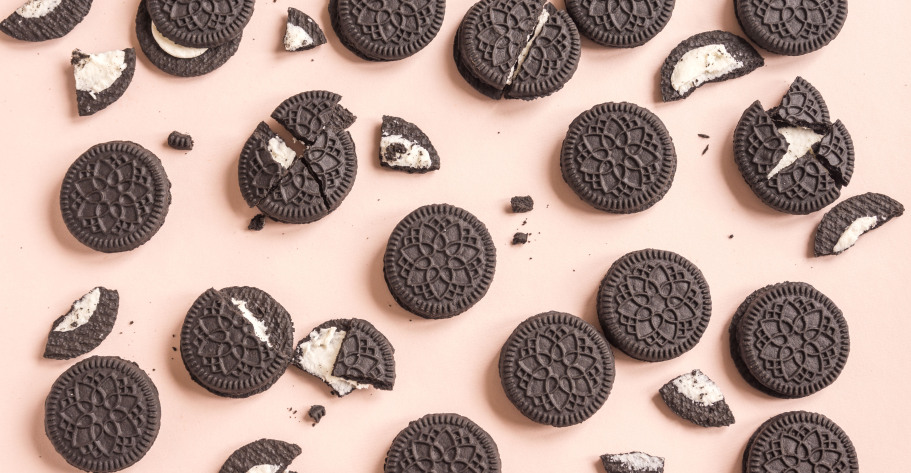
Olam Food Ingredients (Ofi) and Mondelēz are under fire for using ammonium carbonate, an authorised food additive, in cocoa and Oreo cookies - but the accusations stem from greater concerns over industrial emissions of toxic ammonia and nitrogen oxide in the Netherlands.
An article published in the Dutch publication NoordHollands Dagblad entitled Oreo cookies black thanks to large amounts of environmentally polluting ammonia accuses agri-food giant Ofi of using ammonia, a toxic pollutant, to make cocoa darker. Oreo cookie-maker Mondelēz International is a major purchaser of this cocoa.
The article (in Dutch) reads: "Cocoa factory Olam in Koog aan de Zaan has been mixing large amounts of toxic ammonia with ground cocoa beans for years to blacken the famous Oreo cookies. The factory managed to keep this a secret for years, even though the government knew about it."
Ammonium carbonate: An authorised food additive
Ammonia, which is toxic, is not directly used in food processing. However, ammonium carbonate is a widely used food additive that is considered safe and authorised under EU regulation (EC) No 1333/2008. It can be made by reacting the minerals ammonium sulphate and calcium carbonate, or by reacting anhydrous ammonia and carbon dioxide.
Listed on-pack with the E number E503, ammonium carbonate is used as an alkalising agent and rising agent. In cocoa processing, for instance, it is used to make the cocoa darker and improve the flavour after the roasting process by reducing the bitterness.
In response to the article, Ofi said it strictly adheres to all food safety standards and regulations, and that the additive is present in the final ingredient in "a negligible amount".
No maximum levels for certain applications
The use of E503 as an alkalising agent has no maximum level – EU regulations stipulate that manufacturers can use the additive quantum satis, or as much as is needed - but it must be used "in accordance with good manufacturing practice, at a level not higher than is necessary to achieve the intended purpose and provided the consumer is not misled".
Rob Kooijmans, food safety consultant and co-founder of the Food Strategy Institute, told Ingredients Network that Ofi and Mondelēz's use of the additive is authorised and that, to date, no study has indicated ammonium carbonate could negatively impact health when consumed.
However, Kooijmans noted that the same EU regulation does set limits when using ammonium carbonate as a rising agent in foods for infants and young children under the age of three.
"The question that arises is whether the use of ammonium carbonate, which is declared by Mondelēz on the packaging, is there to darken the cocoa powder or has been added by Mondelēz as a rising agent," he said.
"In theory, one could say that the ammonium carbonate which is present in the cocoa powder of Olam could act as a rising agent - we can be pretty sure that the regulatory affairs department of Mondelēz has looked into this and can substantiate that claim."
"However, coming back to the sentence ‘necessary to achieve the intended purpose and provided the consumer is not misled’, one could say that Mondelēz is on thin ice using the cocoa powder of Olam in their product, which is intended for young children."
A spokesperson for Mondelēz said that it adds food-grade ammonium carbonate to Oreo cookies as a rising agent in its own factories (it did not specify how much) but said it does not market its products, including Oreo cookies, to children as it has "a strict no-marketing-to-kids policy" across all its brands.
The Netherlands and nitrogen: A small country with a big problem
In addition to focusing on the use of ammonium carbonate in food, the NoordHollands Dagblad article accused Ofi of "[leading] local residents, competition, and politicians astray by publishing incorrect information about the cause of the substantial ammonia emissions from this factory".
It cited an unnamed whistleblower who said Ofi has not invested enough in its Koog aan de Zaan factory to handle the large quantities of ammonia it uses.
Harmful emissions of nitrogen and ammonia (a compound of nitrogen) have become a sensitive topic in the Netherlands in recent years.
Dubbed "the tiny country that feeds the world", the Netherlands has the highest livestock density in Europe and is the second biggest agricultural exporter in the world after the US. This has created a significant pollution problem, notably due to huge amounts of livestock manure and urine that, when mixed, produce ammonia vapours. Nitrogen run-off is also responsible for polluting waterways and lakes.
Policymakers are taking the issue seriously and the Dutch government has made reducing agricultural and industrial nitrogen oxide emissions a top priority. Last year, it announced an ambitious and controversial €25-billion plan to reduce livestock that includes an offer to buy out farmers or relocate them.
Ofi: Working to reduce ammonia emissions
So, is Ofi's use of ammonium carbonate significantly contributing to the problem?
According to a report in De Telegraaf, the top industrial polluters for nitrogen oxides in the Netherlands outside the farming sector include Tata Steel, Schiphol airport, Dow chemicals, petrol refineries owned by BP, Shell, and Esso - and Olam Cocoa and Cargill Cocoa.
Ofi said the ammonia emitted into the air surrounding its factory is harmless to people, and cited an Area Health Authority report published in 2021 that comes to this conclusion.
The multinational said that only 1.25% of ammonia emissions in the Netherlands are linked to industrial processes, and that it is working to reduce its emissions. In 2021, it cut ammonia emissions by 84% at the Koog aan de Zaan facility by investing in devices known as thermal oxidizers, it said.
"We are transparent about using ammonia in our production process, both with our customers and the authorities in the Zaan area. For example, we list the use of ammonia and other additives on all relevant product specifications and report our ammonia emissions to the local environmental authority in line with our environmental permit,” said Ofi."
"We are also exploring innovations that could change the nature of cocoa processing altogether, mitigating the release of ammonia and contributing to a more sustainable future for the industry," it added.
According to NoordHollands Dagblad, Dutch Environment Agency Omgevingsdienst Noordzeekanaalgebied (OD NZKG) knew Ofi was producing excess amounts of ammonia but tolerated it - something that OD NZKG has refuted.
"Olam meets the legal emission standards supervised by the OD NZKG," it said, adding that its remit is to monitor chimney emissions, and not food contaminants.
Companies mentioned
Related categories
Related news

Soy story: WWF scores UK supermarkets on sustainability efforts
12 Nov 2025
WWF has published its latest “Soy Scorecard”, ranking UK supermarkets’ efforts to combat deforestation and land conversion in their soy supply chains.
Read more
Standing Ovation and Bel scale up casein production from dairy co-products
11 Nov 2025
Foodtech company Standing Ovation has partnered with cheese specialist Bel Group to manufacture dairy serums for industrial-scale casein production via precision fermentation.
Read more
New UPF standard hoped to offer consumers ‘coherence and clarity’
10 Nov 2025
Ingredients companies are being urged to enter “a new era of partnership and innovation” following the launch of the industry’s first non-UPF verification scheme.
Read more
Whistleblowers accuse UK meat industry of promoting cheap, unsustainable supply
7 Nov 2025
An anonymous group of industry insiders has accused the UK’s biggest food companies of systematically driving down meat quality and welfare standards.
Read more
Bord Bia presents Irish dairy ingredient suppliers at Fi Europe
6 Nov 2025
Dairygold Co-operative Society, The Carbery Group, and Ornua Co-operative: Meet with sustainable producers of Irish dairy ingredients at Food ingredients Europe 2025, Hall 7.2 Stand M18.
Read more
AI attraction means foodtech startups must ‘prove’ rather than ‘promise’
4 Nov 2025
Reports suggest that artificial intelligence (AI) is sucking investment from foodtech and agritech, but investors say the picture is complicated.
Read more
Penguin and Club bars no longer classed as chocolate
30 Oct 2025
Penguin and Club bars can no longer be classified as chocolate after the pladis-owned McVitie’s brands turned to cheaper alternatives amid the ongoing cocoa crisis.
Read more
Could plant-based protection replace plastic packaging?
29 Oct 2025
Swedish foodtech company Saveggy has launched an additive-free plant-based protection for cucumbers, offering a waste-free packaging solution for fruit and vegetables.
Read more
Does promoting protein content push up plant-based sales?
27 Oct 2025
Promoting the protein content of meat-free products is a more effective sales strategy than adding carbon labels, a study of UK bakery chain Greggs suggests.
Read more
Amazon Grocery launch aims to balance quality with affordability
22 Oct 2025
Global e-commerce giant Amazon has introduced a new private-label food brand, combining existing Amazon Fresh and Happy Belly products with new everyday items.
Read more